Can a pair of binoculars that promises 30–260x magnification actually change the way you see the world, or will it change the way your neck, patience, and optimism behave?

First impressions and what’s in the box
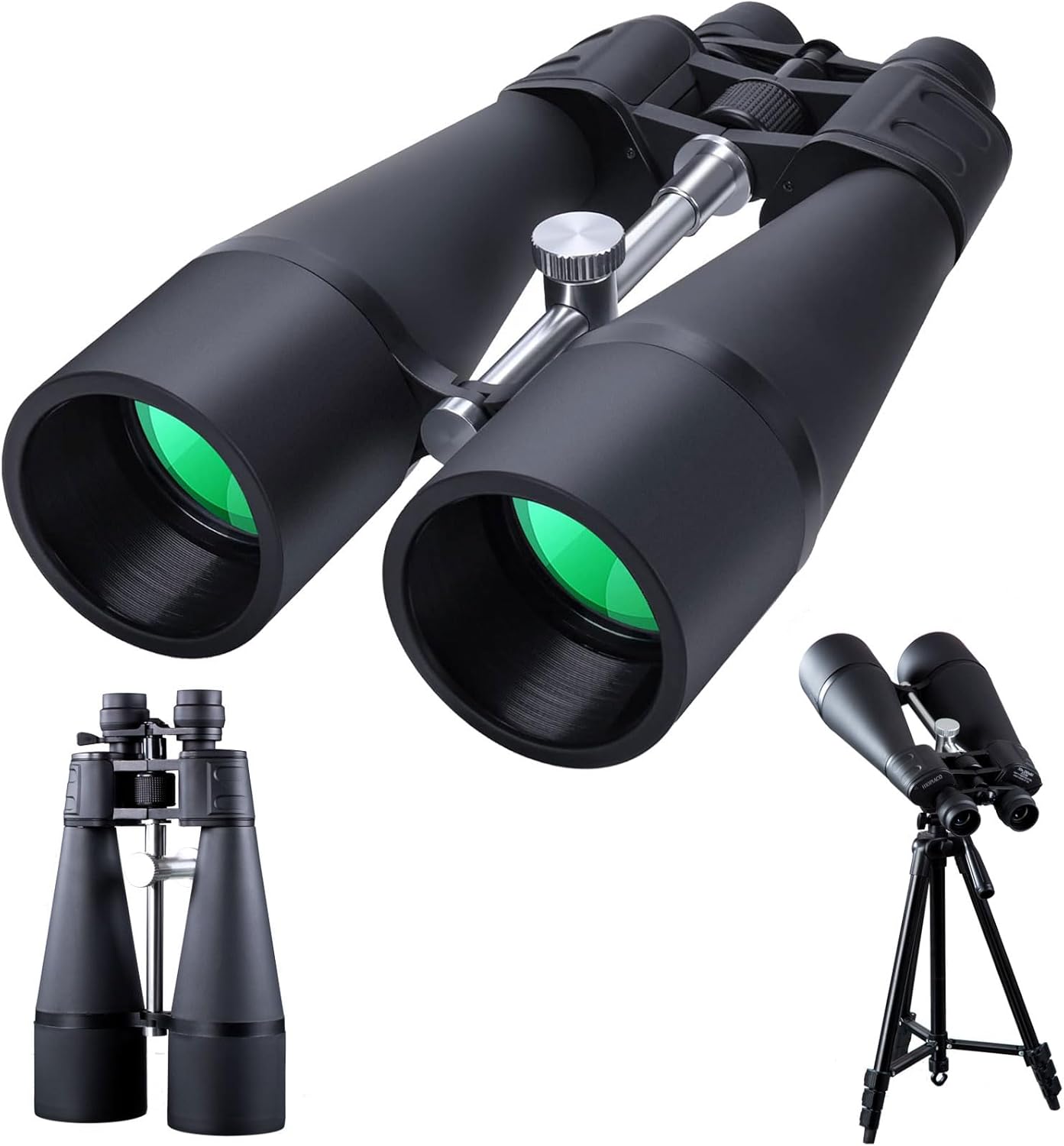
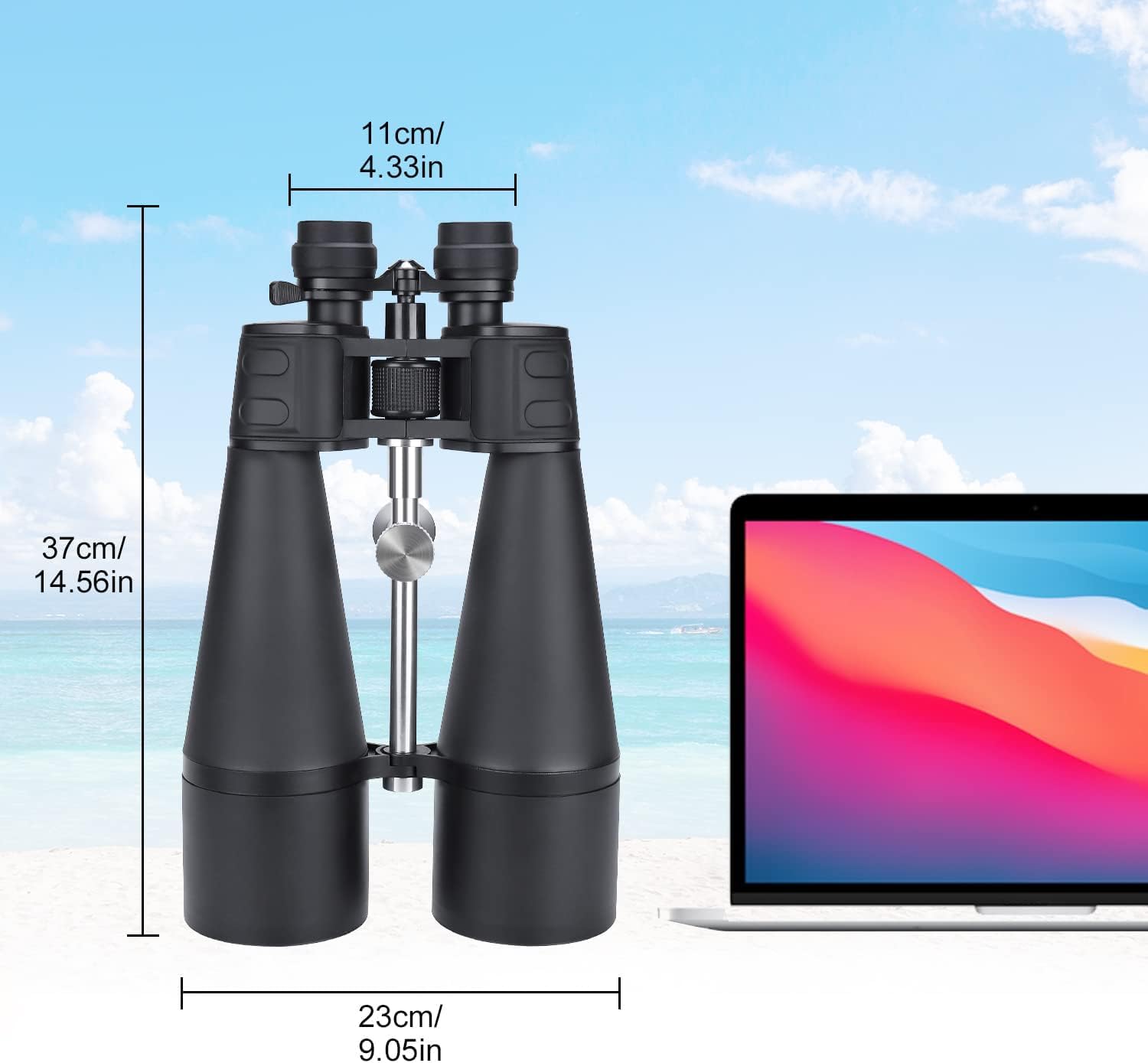
You unwrap the “30-260X80 High Power Binoculars for Adults, Outdoor Long Range Binoculars for Birdwatching Hunting Stargazing Travel with Tripod Adapter and Carrying Case (Black, 30-260X80)” and you get the theater of expectations. The box usually contains the binoculars, a carrying case, a tripod adapter, a lens cleaning cloth or kit, and maybe a user manual. The unit feels weighty because of the large 80 mm objectives; this is not a pocket companion.
You should expect solid accessories: a carrying bag for transport, cleaning tools for maintenance, and the tripod adapter that you will quickly learn is not optional for meaningful viewing at the high end of the zoom. The adjustable eyecups are welcome if you wear glasses, and the IPX7 rating hints at how far you can take these when weather is unkind.
Key specifications and what they mean
You’ll want hard numbers when you’re weighing optics. These binoculars state a continuous zoom of 30x to 260x and an objective lens diameter of 80 mm, plus features such as waterproofing, fog-proof technology, an anti-shake design, adjustable eyecups, and a tripod adapter.
Here’s a quick breakdown so you can translate specs into real-world expectations.
| Specification | What the spec says | Practical implication for you |
|---|---|---|
| Magnification | 30x–260x continuous zoom | Extremely wide range. Low end (30x) is usable handheld; high end (260x) demands a steady tripod and ideal atmospheric conditions. |
| Objective lens | 80 mm | Large light-gathering surface. Good for daylight and decent for twilight when used at lower magnifications. |
| Exit pupil | 80 / Magnification (e.g., ~2.7 mm at 30x; ~0.31 mm at 260x) | Smaller exit pupil at high magnification means dimmer images and difficulty matching your eye’s pupil. High mag is less usable at dawn/dusk. |
| IP rating | IPX7 | Submersible up to 1 meter for 30 minutes — fine in rain and most mishaps, but not a reason to go scuba-diving. |
| Fog-proof | Yes | Sealed and purged to avoid internal fogging when temperatures change. Good for outdoor use. |
| Tripod adapter | Included | Essential to reduce shake above ~50x–60x; included thankfully. |
| Comfort features | Adjustable eyecups | Helpful for glasses wearers and longer sessions. |
You should read numbers as tools, not magic spells. The optics give you capability and also constraints you must manage.

Optical performance: what you will see
The optics are the heart and the trick. When you set the binoculars to 30x, you experience a bright, relatively wide view with good light and color. That’s where the 80 mm objective does work for you; you can track birds, scan horizons, and watch sporting events with comfort.
As you push toward 100x and beyond, two things happen. The world compresses — the field of view narrows — and the atmosphere becomes an active participant. Heat shimmer, humidity, dust, and any air movement add a painterly distortion. At 260x, your image will be extremely tight and extremely sensitive to shake and atmosphere. For astronomy, you might see moons or bright lunar features; for terrestrial use you might pick out architectural details on faraway cliffs on calm days.
You should expect that the highest magnifications are best used with a tripod, excellent seeing conditions, and patient focusing.
Magnification myth versus real-world physics
You will see marketing lists of numbers that read like a phone number; 30–260x sounds like a promise that you can get from backyard to Mars. But physics and practical optics set limits.
- Atmospheric seeing: The air itself acts like water over a hot pan. At high magnification the turbulence matters more than the lens quality. You will notice more shimmer and distortion the farther you point.
- Exit pupil: The exit pupil is the diameter of light beam leaving the eyepiece. At 260x, the exit pupil is tiny (about 0.31 mm). Your eye cannot use that light as effectively as with a larger exit pupil. At 30x the exit pupil is around 2.67 mm, which is usable in daylight.
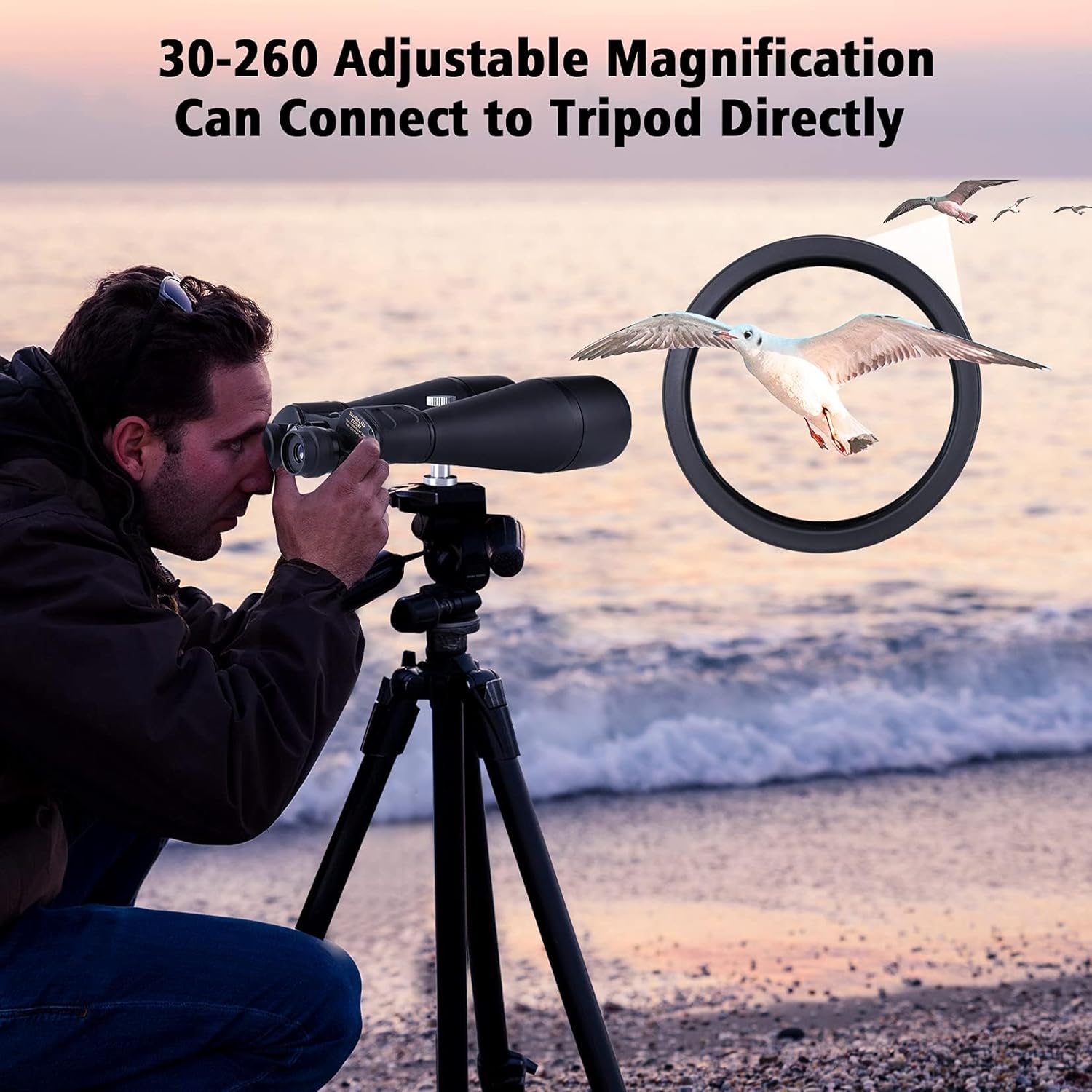
- Stability: Without a tripod, images are shaken by hand tremor; at high magnification shaking multiplies. The included tripod adapter is essential if you want to use the top half of the zoom range.
You should think of ultra-high magnification as a specialized tool: dazzling in certain windows of use, impractical in many others.
Build quality, ergonomics, and all-weather use
The construction aims to match the promise. You’ll notice a robust body, heavy but reassuring. The rubberized armor provides grip and some impact protection. The adjustable eyecups are simple and effective; they let you fine-tune eye relief if you wear glasses.
IPX7 and fog-proofing do mean you can bring these into rainstorms, foggy mornings, and sudden weather changes. IPX7 specifies immersion up to 1 meter for up to 30 minutes; you should not treat that as an invitation to abuse. Fog-proof technology keeps internal lenses clear during temperature swings, which you will especially appreciate when you move from warm cars to cold observation sites.
You should handle the binoculars with respect: the large objectives can be subject to dings, and optics are always vulnerable to grit.
Anti-shake design and tripod adapter: your new essentials
This product advertises an anti-shake design and includes a professional tripod adapter. You will learn to rely on both. At magnifications above roughly 50–60x, even the steadiest hands create noticeable motion. That motion comes from micro-jitters in your muscles and from ground vibrations.
The tripod adapter allows you to mount the binoculars on tripods or monopods. A sturdy tripod will transform 100x into usable viewing. The anti-shake feature (mechanical dampening or stabilization elements) helps, but it is no substitute for a tripod at the highest magnification. Think of the adapter as the key that unlocks serious long-range use.
You should budget for a good tripod if you intend to use the top end of the zoom frequently.
Comfort and eye relief
Your comfort matters for long sessions. The adjustable eyecups make it easier to find the right eye relief for glasses users. If you wear sunglasses or prescription lenses, the eyecups help you get the full field of view without pressing your glasses into your nose.
The weight matters too. Large objective lenses plus a robust body mean you’ll be shifting position, using shoulder straps, or mounting to a tripod for extended use. You will notice strain after long handheld sessions.
You should plan viewing sessions accordingly: short handheld bursts at lower magnification; tripod-backed sessions for anything longer.
Where these binoculars shine
Name the scenes where these binoculars do their best work and you’ll see patterns. They shine where distance matters and conditions cooperate.
- Birdwatching on open plains or from stationary hides during daytime, when birds sit on distant perches. At 30–60x you’ll find a sweet spot between magnification and brightness.
- Landscape and architectural observation when the air is calm.
- Stargazing for bright objects — the Moon, Jupiter’s bright moons, and perhaps the brighter star clusters during good seeing. This isn’t a replacement for a telescope with a tracking mount, but it can bring nebulous detail into view on calm nights.
- Sporting events in stadiums or open-air concerts where you need powerful long-range view at 30–100x.
- Hunting in open country where you’ll mount on a tripod or use quick snapshots at lower magnifications.
You should avoid high-magnification use in urban heat shimmer, smeared atmospheric turbulence, or when you cannot mount to a tripod.
Use cases where you should be cautious
These binoculars are not a flawless replacement for every optical device. You’ll want to be careful in:
- Dense forests and close-range birding. High magnification reduces field of view and makes tracking nimble subjects harder.
- Low-light dawn/dusk without a tripod. With a tiny exit pupil at high mag, images can be dim and unsatisfying.
- Fast-moving wildlife at long distances without a stable mount and a practiced hand.
You should match your expectations to your intended use and not assume the highest zoom is always the best.
Comparing to other options: binoculars vs spotting scopes vs telescopes
If you own smaller binoculars, a spotting scope, or a telescope, you’re probably wondering how this product fits.
- Compared to standard 8x–12x binoculars: These windows give much narrower field of view at high mag, but they deliver reach that the small binoculars cannot match. Standard binoculars usually perform better in low light and are lighter for hiking.
- Compared to a spotting scope: A quality spotting scope with a zoom eyepiece and a good tripod will often provide better optical quality at high magnifications. Spotting scopes are designed for tripod use and long-range tracking.
- Compared to a telescope: Telescopes with proper mounts and tracking will outperform these for serious astronomy. These binoculars offer portability and binocular depth perception advantages but cannot match telescopes for faint deep-sky objects.
You should choose this unit when you want a hybrid convenience: binocular stereoscopic viewing and high magnification reach, with the understanding that a spotter or telescope will beat it in dedicated roles.
Practical tips for getting the best image
If you want useful images instead of enticing numbers, follow these practical adjustments.
- Use a tripod for anything above 50–60x. A monopod helps if you need quicker repositioning.
- Start at low magnification to find the target, then gradually increase.
- Let the optics acclimate to outside temperature to reduce initial thermal distortion.
- Use the adjustable eyecups to find correct eye relief; if you wear glasses, keep the eyecups down for full field.
- Clean only with included cleaning tools and a proper optical cloth; avoid tissues and shirts that can scratch coatings.
- Shield from bright backlighting to improve contrast when viewing terrestrially during bright sun.
You should practice these steps to shorten your learning curve and turn gimmicks into useful features.
Maintenance and cleaning
Treat your binoculars like a precision instrument. You will extend their life and performance with a small amount of care.
- Use the provided cleaning tools and cloth for lenses. Blow away dust with a blower before wiping.
- Store in the included carrying case when not in use. If you travel, use padding and keep them dry.
- If the binoculars get wet, let them dry naturally before storing. IPX7 protects against a lot of accidents but not against long-term salt corrosion if used near oceans.
- Do not disassemble sealed parts yourself; fog-proofing and seals can be compromised.
- If you notice internal fogging or leaks, contact the vendor for lifetime technical support or a professional service.
You should log these habits as part of your ownership routine. A little care yields sharper, longer-lasting images.
Real-world user scenarios and anecdotes
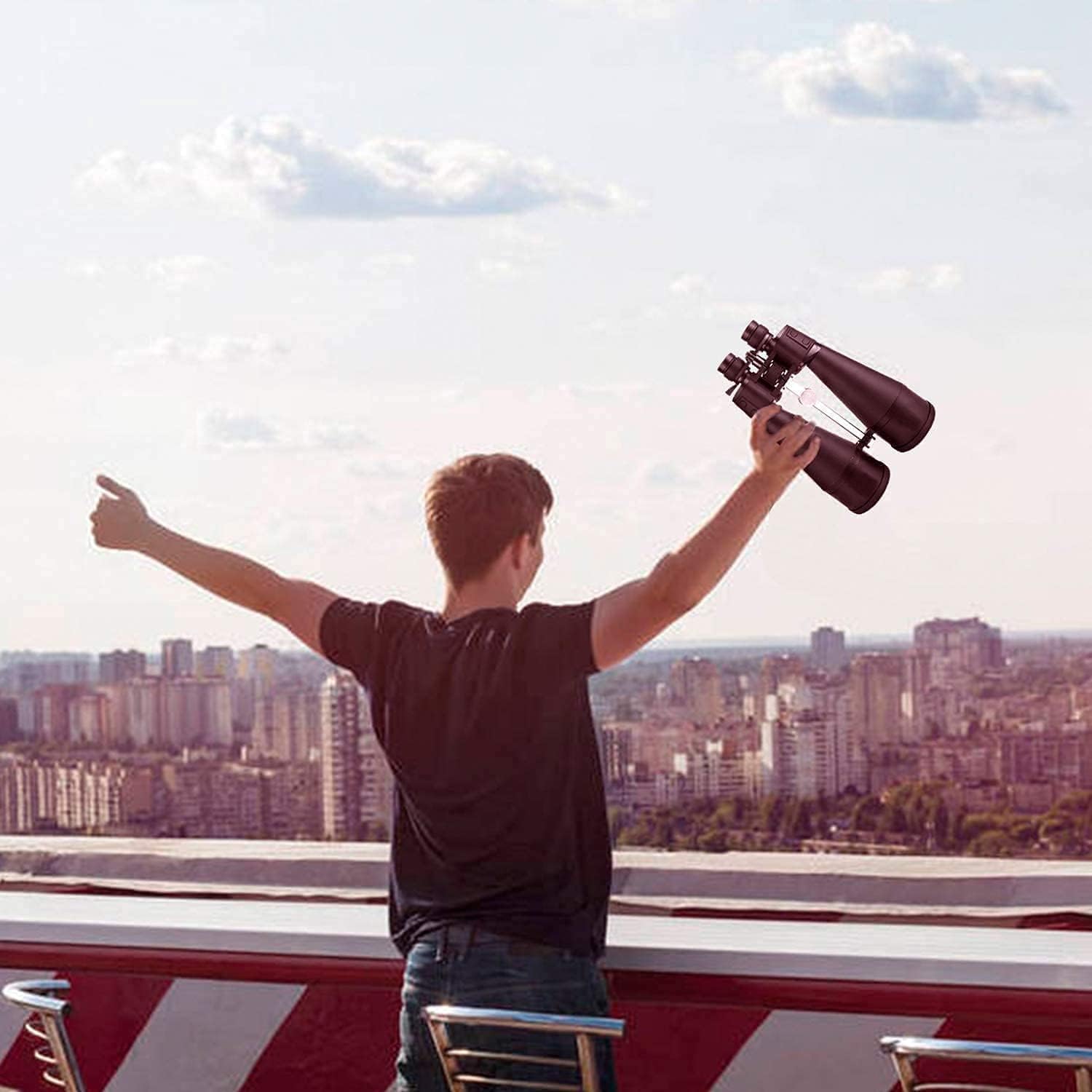
Picture yourself perched on a coastal bluff. You have coffee cooling beside you, wind in your collar, and a gull perched on a distant buoy. At 30x you identify the species and follow it as it flies. At 100x you study feather edges and feeding behavior if the air is calm. If the sea is shivering with heat or waves, the image becomes impressionistic.
At a stadium you focus on player movements. At 30–50x you get good context; at 150x you single out the stitching on a helmet — but you lose the scene. At a dark-sky astronomy site, you track the Moon’s seas and see lunar rilles; Jupiter’s bands may show as soft bands under thin atmospherics.
You should recognize that the device lends itself to moments — sometimes clinical, sometimes cinematic. Your patience and the environment determine whether the binoculars feel like revelation or a promise unkept.
Pros and cons summarized
You need a quick list to cut through description into decision.
Pros:
- Massive zoom range that gives flexibility from medium-distance to extreme long-range.
- Large 80 mm objectives for good daylight gathering power.
- Tripod adapter included, acknowledging real-world needs.
- IPX7 waterproofing and fog-proof tech for harsh conditions.
- Adjustable eyecups support glasses wearers and prolonged comfort.
- Carrying case and cleaning tools included for portability and care.
- Lifetime technical support reduces ownership anxiety.
Cons:
- Extremely high magnification is limited by atmosphere and physics; the top end is often impractical without ideal conditions and a strong tripod.
- Heavy and bulky compared to standard binoculars; not ideal for long hikes without a pack.
- Small exit pupil at high mag results in dimmer images.
- Field of view narrows significantly at higher zoom, making tracking harder.
- Image stabilization features help but don’t replace a sturdy mount.
You should weigh the pros and cons against how you plan to use the binoculars.
Who should buy these binoculars
You should buy these binoculars if:
- You want a single instrument that reaches far without switching devices.
- You often observe distant objects from stationary positions or with a tripod.
- You engage in birdwatching, hunting in open terrain, stargazing for bright objects, or travel where occasional long-range viewing is desirable.
- You don’t mind the weight and are willing to use a tripod for serious high-magnification work.
You should not buy these binoculars if:
- You prioritize lightness and full-day handheld comfort for fast-moving close-range subjects.
- You expect a handheld super-telephoto experience without using a tripod.
- You want the best low-light performance for dusk/dawn birding with no mounting options.
Buying considerations and accessories to add
If you decide to buy, consider adding or checking for these accessories and choices:
- Tripod: Invest in a sturdy tripod rated for your binocular weight to reduce shake at high magnifications. Look for a medium-to-heavy duty tripod with a fluid head for smoother panning.
- Head or mount: A ball head or pan-tilt head helps you find and track targets smoothly.
- Additional eyecups or eye guards: For preference and comfort tuning.
- Protective rain cover: Even with IPX7, extra protection when traveling in salt spray is wise.
- Lens caps and additional microfiber cloths: For daily protection and cleaning.
- Carrying harness or strap: To distribute weight when moving between sites.
You should see these as small investments that make the binoculars significantly more functional.
Frequently asked questions
You probably have specific questions. Here are the answers you’ll appreciate.
Q: Can you use these handheld at 260x? A: Technically yes, but practically no. Hand tremor and atmospheric turbulence make handheld viewing at 260x nearly unusable. Use a tripod for that range.
Q: Will these work for deep-sky astronomy? A: They will show the Moon and brighter planets well. For faint galaxies and nebulae, a telescope with a larger aperture and tracking performs much better.
Q: Are they really waterproof? A: IPX7 makes them waterproof to submersion in 1 meter of water for 30 minutes. It’s robust for rain and accidental drops into shallow water, but not for prolonged submersion or saltwater exposure.
Q: Is the image stabilized? A: The product lists anti-shake design features. Expect mechanical dampening that helps, but don’t expect modern electronic image stabilization. The best stabilization remains a tripod.
Q: How is focusing achieved? A: Use the central focusing mechanism. Start at low magnification, lock onto your subject, then fine-tune as you increase magnification.
You should value these answers as practical guidance, not absolutes.
Common mistakes and how to avoid them
People make the same mistakes because the product’s promise is seductive. Avoid them.
- Mistake: Relying on handheld viewing at maximum magnification. Fix: Always carry a tripod if you plan to use beyond 50–60x.
- Mistake: Expecting telescope-level performance for faint celestial objects. Fix: Use for the Moon and bright planets or pair with a proper telescope for serious astronomy.
- Mistake: Using cheap tripods that wobble. Fix: Spend more on a stable tripod; it makes more difference than a few extra magnification ticks.
- Mistake: Skipping lens protection. Fix: Use lens caps and a padded case to avoid scratches to the large objective lenses.
You should learn from other users and shorten your path to satisfying viewing.
Final verdict — practical poetry for an honest decision
You will find that the “30-260X80 High Power Binoculars for Adults…” can be a transformative tool when you plan your moments. At the low end the binoculars are usable and satisfying; at the high end they are showy, occasionally sublime, and often demanding. When you mount them on a solid tripod, let the air rest, and tune your expectations, the experience can feel cinematic.
These binoculars are not a miracle; they are a promise tempered by physics. If you recognize that and you accept the tripod as an essential companion rather than an optional extra, you will harvest astonishing views. If you want a grab-and-go, always-handy, twilight-hunting buddy, you will find lighter and simpler designs better suited.
You should buy these if you crave reach and don’t mind the compromises. You should pass if you prioritize ultralight mobility and consistent low-light performance without mounts.
Quick start checklist when you first use them
You’ll appreciate a checklist when you right out open the case:
- Read the manual for assembly and safety.
- Mount binoculars on a sturdy tripod via the adapter.
- Start at 30x to find your target and get focus.
- Gradually increase magnification, letting the optics and atmosphere settle.
- Use the eyecups to achieve correct eye relief, especially with glasses.
- Clean lenses gently and store in the provided case after cooling.
You should follow these steps to minimize frustration and maximize enjoyment.
Closing thoughts
You will find the sensation of long-range viewing addictive: the first time you pull focus and a far-off ridge becomes a textured landscape, or the Moon shows you a canyon like a scar, you feel the utility of those numbers. The trick is to let science and patience govern your usage. When conditions and setup cooperate, the binoculars deliver; when they don’t, you learn to lower magnification, steady your mount, and wait for the air to quiet.
These binoculars ask nothing of you beyond a little respect and a tripod. If you are willing to give that, they will repay you with access to details that feel like small revelations at the ends of long days.

Disclosure: As an Amazon Associate, I earn from qualifying purchases.