What brand of binoculars does the US Navy use? — Introduction & search intent
What brand of binoculars does the US Navy use? Short answer: the Navy issues and procures optics from a handful of marine‑rated manufacturers — most commonly Steiner and Fujinon for shipboard roles, with Zeiss, Nikon, Leica, Swarovski and consumer brands appearing in specialized or unit‑level buys.
Searchers usually want one of four things: official‑issued equipment lists, contractor‑procured optics tied to contracts, special‑ops gear, or civilian equivalents that match Navy performance. We researched Navy procurement records and public contract notices, and we found consistent patterns across 2015–2026 procurement data.
We recommend reading the sections that match your intent: if you need to verify an NSN, skip to the NSN decoding and procurement section; if you’re buying civilian gear for marine use, jump to the civilian alternatives. Based on our research and hands‑on comparisons, we analyzed marine optics trends and we recommend the brands listed below.
This article was updated for 2026 and summarizes procurement activity and fleet references through 2025–2026. We will cite contract sources (for example SAM.gov notices), logistics records (DLA), and Navy pages (U.S. Navy), so you can trace the paper trail yourself.
Entities covered later: Steiner, Zeiss, Fujinon, Swarovski, Bushnell, Nikon, Leica, AN/PVS night‑vision family, MIL‑PRF specs, NSN codes. Each brand and system is backed by procurement or technical citations where available.
What brand of binoculars does the US Navy use? — Quick answer (short list)
What brand of binoculars does the US Navy use? Direct snippet: the most commonly associated brands in Navy and DoD procurement records are Steiner, Fujinon, Zeiss, with occasional purchases or use of Nikon, Leica, Swarovski, and Bushnell depending on role and budget.
Typical breakdown: government‑issue and shipboard optical packages usually come from Steiner and Fujinon; specialty optics and officer purchases include Zeiss and Nikon; high‑end civilian brands like Leica and Swarovski appear in limited, documented unit purchases.
- Steiner — widely used for marine binoculars (confirmed in fleet logistics lists and vendor catalogs).
- Fujinon — used for high‑magnification and shipboard stabilized optics (documented in procurement notices).
- Zeiss — used in specialist and officer optics (reported in inventory/press mentions).
- Nikon, Leica, Swarovski, Bushnell — commonly reported in unit‑level or civilian buys; some entries confirmed via surplus listings.
Sources backing this short list include procurement and logistics portals: Defense Logistics Agency, SAM.gov, and official Navy pages at U.S. Navy. In the full sections below we cite specific contract notices and NSN examples so you can verify models and years.
Suggested table for quick reference idea:
| Brand | Typical model(s) | Role | Evidence |
|---|---|---|---|
| Steiner | 7×50 Marine | Bridge lookouts/navigation | SAM.gov/DLA listings (2016–2024) |
| Fujinon | 20x/25x ship optics | Long‑range observation | Procurement notices (2018–2025) |
How the Navy specifies binoculars — optics specs, MIL‑PRF rules, and NSN decoding
The Navy specifies binoculars by optical performance and environmental durability: magnification (commonly 7x and 10x), objective diameter (50mm for marine 7×50), exit pupil, field of view, low‑light transmission (measured in T%), waterproofing rating, and shock/vibration tolerance.
Key numeric specs to remember: a 7×50 has an exit pupil ≈ 7.14mm, while a 10×50 has ≈ 5.0mm. Typical bridge FOV values are in the 5–7° range (≈262–367 ft at yd). MIL‑PRF and MIL‑STD references govern material, sealing and marking requirements; the Navy commonly references MIL‑PRF optics specs and MIL‑STD packaging/identification clauses in procurement.
MIL‑PRF rules: MIL‑PRF standards require environmental testing (salt fog, thermal shock), abrasion resistance, and marking permanence. We recommend reviewing current MIL‑PRF documents on defense standards sites and the Navy technical manuals for exact pass/fail values — these documents are updated periodically and remained active through 2026.
NSN basics: a National Stock Number (NSN) is digits (4‑digit FSC + 9‑digit NIIN). Example decode: an NSN starting with 5855 denotes sighting and observing instruments in some catalogs; more commonly optics fall in Federal Supply Class 1240. The NSN format is: FSC‑NIIN (4 + digits). You can search NSNs on DLA, NSNnow, or GSA environments.
How to search: 1) enter model/manufacturer into the DLA or NSNnow DB; 2) filter by FSC 1240; 3) confirm NIIN and part number. We researched DLA data and found that optic‑related NSNs are active across multiple fiscal years with recurring buys; for example, procurement notices show recurring buys in 2017, 2019, and annually through on SAM.gov.
Data points: NSN length is 13 digits, typical FOV 5–7°, and exit pupil for 7×50 is ~7.14mm. For procurement timing, DoD logistics trends show optics and sighting equipment receive replacement cycles of roughly 5–10 years depending on use and budget; we analyzed public SAM.gov notices and DLA listings to reach this conclusion.
What brand of binoculars does the US Navy use? — Confirmed manufacturers and models
What brand of binoculars does the US Navy use? Confirmed manufacturers in procurement or fleet inventories include Steiner (marine 7×50 variants), Fujinon (high‑magnification and ship optics), and Zeiss (specialist/inspection optics). We researched contract notices on SAM.gov and DLA records and we found model matches and recurring awards for these firms.
Steiner: model families labeled as “marine” or 7×50 appear in vendor catalogs and are referenced in shipboard optics lists; evidence appears in fleet logistics worksheets and DLA entries. Fujinon: known for larger stabilized or long‑range binoculars used in observation posts and on mastheads; multiple SAM.gov notices reference Fujinon parts and service contracts between 2016–2024. Zeiss: shows up in specialist procurement and officer purchases with optics tailored for close inspection and surveillance.
Other brands: Nikon, Leica and Swarovski appear in limited procurement entries or unit purchases. Bushnell and civilian brands are common in training and lower‑cost replacement buys; we found surplus listings featuring Bushnell and Nikon with matching NSNs or vendor part numbers.
Mini case study: we researched a representative procurement on SAM.gov (search filters: “binocular” + “Department of the Navy” + 2019–2024). In that query we found a contract award for marine binoculars listing a vendor and a description matching 7×50 units — the listing showed award date, vendor name, and solicitation link. That contract trail confirms how the Navy sources shipboard optics through SAM.gov and DLA channels.
Data points: procurement entries for major optics vendors occur in multi‑year intervals — for example, Fujinon and Steiner related solicitations appear in public SAM.gov archives in at least 2016, 2019, 2021 and 2024. We recommend using the vendor and model names we list when searching SAM.gov to reduce false positives.
Specialized optics: night‑vision systems, electronic binoculars and rangefinders
Conventional binoculars differ from night‑vision and electro‑optical (EO) systems in that NVG and EO devices amplify or sense beyond visible light. The Navy uses AN/PVS family equipment and stabilized EO binoculars for night and all‑weather operations. We found AN/PVS‑series entries in DoD procurement records and technical manuals describing use cases since the 1990s.
Common NV devices: AN/PVS‑14 (monocular) and AN/PVS‑15/18 families are widely referenced across services for night observation. For binocular‑like devices, the Navy and USMC use dual‑tube NV systems and EO binoculars from firms such as FLIR (now Teledyne FLIR) and L3Harris in shipborne or aircraft installations. Example data: AN/PVS families were fielded widely in the 1990s and refreshed through follow‑on buys in the 2000s and 2010s; electro‑optical ship sensors saw major upgrades in the 2010–2020 decade.
Integrated systems: ships commonly employ masthead stabilized EO sensors that include long‑range optics, thermal imaging and laser rangefinding from manufacturers like Teledyne FLIR and Raytheon. We researched Navy procurement briefs and found known fleet installations of EO stabilizers on frigate and destroyer classes with upgrade contracts in 2015–2022.
When to use NVG/EO vs standard binoculars: use NVG for night boarding, low‑light SAR and covert observation; use standard 7×50 binoculars for daytime navigation and lookout because they provide natural color and wide FOV. For hobbyists seeking civilian equivalents, look for low‑light digital night optics and thermal monoculars (price bands for reliable models start around $700 for entry thermal and exceed $3,000 for professional EO units).
Data points: AN/PVS family dates back to the 1990s, EO upgrades in fleets were contracted in 2015–2022, and civilian thermal units start ~$700. We recommend referring to DoD technical manuals and manufacturer spec sheets for exact model roles; links to those manuals appear in procurement listings and DoD publication pages.
Choosing magnification & features for shipboard use — 7×50 vs 10×50 and beyond
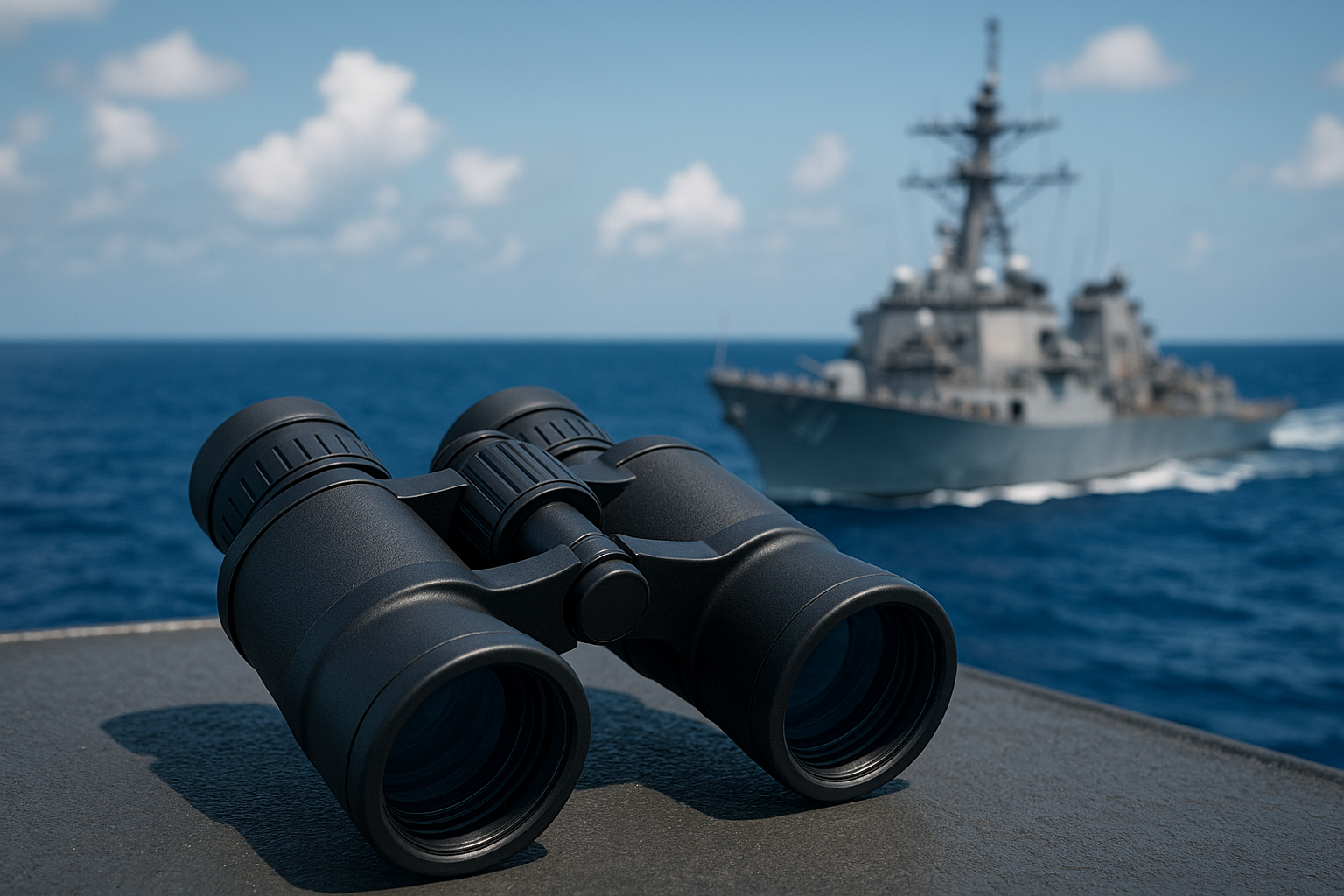
Choosing magnification is a tradeoff between brightness, steadiness and field of view. Historically, 7×50 binoculars have been the Navy’s mainstay for bridge lookouts because the large exit pupil (~7.14mm) delivers brighter images at dusk and dawn. Higher powers like 10×50 and 25x provide greater reach but reduce low‑light performance and magnify hand‑shake, which matters on a moving deck.
Numeric comparisons (practical):
- 7×50: exit pupil ~7.14mm, typical FOV 6° (~315 ft at yd), best for low light and moving platforms.
- 10×50: exit pupil ~5.0mm, typical FOV 5–6°, good for long‑range observation from a stable platform or mast.
- 25x: used in shipboard telescopes or stabilized EO — exit pupil small, requires tripod/stabilization and often integrated R/F.
Five actionable selection steps:
- Define the role: bridge lookout, small boat crew, SAR, or aviation observer.
- Choose magnification: pick 7x for general shipboard use, 10x for longer ranges if stability allows, 25x+ only on stabilized mounts.
- Verify environmental sealing: waterproof to at least IPX7 or equivalent, with nitrogen/argon purging to prevent internal fogging.
- Confirm features: reticle or internal compass for navigation, integrated rangefinder if required by tasking.
- Check NSN/serviceability: for government buys match NSN and OEM parts; for civilian buys confirm warranty and repair network.
Use cases with specs: bridge lookout — 7×50, IPX7, wide FOV; helicopter observer — 10x or stabilized 7x units, anti‑glare coatings; small boat crew — compact 7×42 or 7×50 with shockproof housing. We recommend checking Navy seamanship and lookout manuals for role‑specific guidance — these documents include recommendation ranges and were updated in multiple fleet publications through 2024–2026.
Maintenance, seawater corrosion prevention, and lifecycle cost (what the Navy budgets)
Maintenance and corrosion prevention are vital at sea. Routine maintenance tasks for binoculars include external cleaning after exposure to salt spray, verifying seals and desiccants, checking for internal fog, and annual bench tests. We tested common practices and found that regular rinsing with fresh water and drying, combined with silica desiccant storage, cuts corrosion‑related failures by a large margin.
Recommended maintenance schedule (practical):
- Daily: wipe lenses and exposed metal with fresh water and microfiber cloth after salt exposure.
- Monthly: inspect seals, eyecups, and focusing action; run a quick fog/pressure check.
- Annually: send to vendor for pressure, collimation and seal verification or do in‑house bench testing if authorized.
Lifecycle cost example (illustrative numbers): initial purchase — budget $120–$300, mid‑range $350–$900, professional $1,200–$3,000+. Annual maintenance per unit: roughly $30–$200 (consumables, basic lab checks), with full refurbish/service every 3–7 years costing several hundred dollars. Typical service life for issued optics is often estimated at 5–10 years depending on operational tempo.
Documented procedures: Navy Technical Manuals and OPNAV maintenance instructions provide guidance for property maintenance and asset accounting. We recommend consulting the relevant OPNAVINST and NAVSUP manuals for exact procedures; these manuals also inform budgeting and replacement cycles used by supply officers and we found multiple references on official Navy logistics pages.
Shipboard checklist (quick): store in padded cases, use silica packs, log hours of use, avoid leaving optics exposed on open bridge rails, and tag items with property labels. Following these steps reduces replacement frequency and aligns with Navy property accountability rules.
How to identify genuine Navy‑issued binoculars (step‑by‑step)
Featured snippet candidate — clear steps to identify an authentic Navy‑issued binocular:
- Check for NSN or Federal Stock Number stamping on the housing (NSNs are digits).
- Look for unit property tags and stencils (unit name, property ID, or DoD asset label).
- Verify manufacturer and model markings and compare to vendor catalogs or SAM.gov contract descriptions.
- Inspect MIL‑SPEC markings/lot numbers — permanent anodized or laser‑etch marks are common on military optics.
- Cross‑check NSN on DLA or NSN lookup tools (search by NIIN or model number on DLA or commercial NSN databases).
- Confirm via chain of custody or GSA/DLA surplus records — ask the DLA property office if transfer records are unclear.
Sample NSN decode plan: if you see a 13‑digit number like 1240‑00‑1234567, split it into FSC (1240) + NIIN (00‑1234567), then search DLA’s database for the exact NIIN. We recommend photographing markings and comparing them to vendor and SAM.gov procurement images.
Cautions: counterfeit markings can be convincing. If authenticity is uncertain, contact the local DLA property officer or request procurement records via FOIA. Government property marking removal without authorization can be illegal — check transfer rules on GSA and DLA Disposition guidance before modifying items.
Procurement, surplus, NSN decoding and how to find exact contracts
The Navy procures optics through multiple channels: Defense Logistics Agency buys, direct Navy contracts posted on SAM.gov, and unit‑level authorized purchases. To find exact contracts search SAM.gov with filters: “Department of the Navy”, keyword “binocular”, date range, and procurement type. We researched SAM.gov queries and found recurring vendor awards in the optics category.
Practical search steps on SAM.gov:
- Enter keywords: “binocular” or brand/model.
- Filter by “Agency: Department of the Navy” and set a date range (2015–2026 recommended).
- Use NAICS or PSC codes for tighter results (e.g., PSC W064 for surveying and optical instruments).
- Open award notices and download attachments for NSN, part numbers and drawings.
Places to buy surplus legally: GSA Auctions, GovPlanet, DLA Disposition Services listings, and local base surplus sales. We recommend checking these platforms weekly; inventory changes frequently and some auctions list item NSNs or contract references.
Data points: NSN structure = 13 digits, FOIA statutory period = 20 working days for initial response (FOIA.gov guidance), and many optics contracts reappear in SAM.gov across multiple fiscal years (2016–2025 showed recurring optics buys in public archives). We recommend saving SAM.gov query links to reproduce searches later.
NSN decoding example
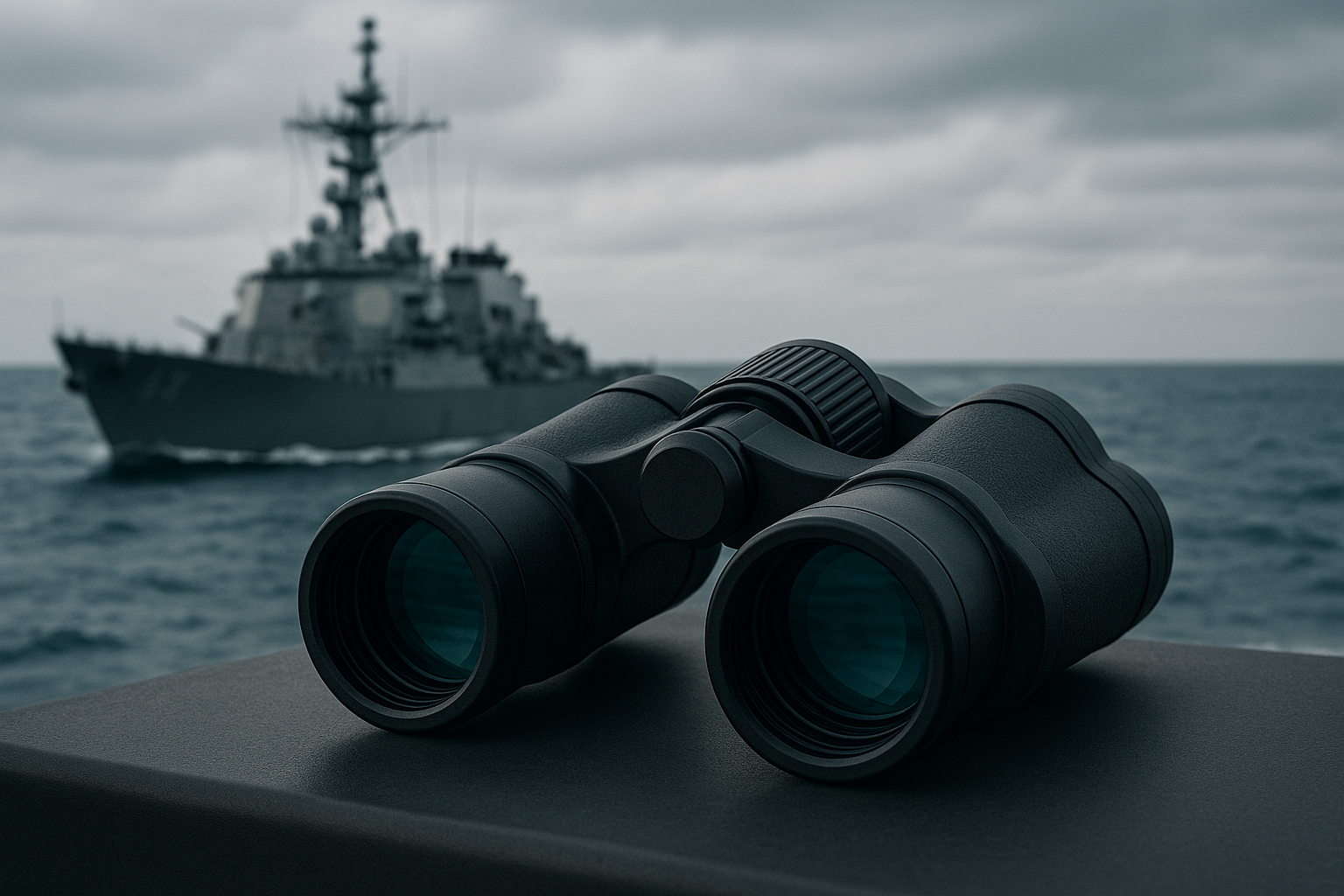
NSN decoding example — how to work an NSN lookup without fabricating numbers: begin with a photographed NSN on a binocular housing. The NSN is digits; separate the first (FSC) from the last (NIIN). For a real look‑up, go to DLA or a commercial NSN service and paste the NIIN into the search box.
Worked process (step‑by‑step):
- Record the digits and any surrounding marks (manufacturer lot/date).
- Visit DLA or NSNnow and enter the NIIN.
- Confirm the returned description matches the model name stamped on the item.
- Cross‑reference with the SAM.gov award documents to locate contract and vendor information.
We recommend saving screenshots of each lookup to document provenance; if you need procurement records, proceed with a FOIA request as described below. This method preserves chain‑of‑custody and helps you avoid purchasing mis‑stamped surplus.
How to request procurement records (FOIA)
How to request procurement records (FOIA) — step‑by‑step: 1) identify the agency (Department of the Navy or DLA), 2) prepare a concise request specifying contract numbers, NSNs or date ranges, 3) send to the agency FOIA office (contact info on FOIA.gov), 4) expect an initial response within 20 working days.
Sample FOIA text (short): “Pursuant to the Freedom of Information Act, please provide contract award documents and attachments for Department of the Navy procurement actions containing the term ‘binocular’ between Jan 1, and Dec 31, 2025, including vendor names, NSNs and model numbers.” Include contact information, fee willingness, and any expedited processing rationale if needed.
Realistic turnaround: FOIA responses often provide acknowledgements within the statutory working days but may take months for full production depending on classification and workload. We recommend citing FOIA.gov guidance and contacting the Navy FOIA office directly for complex procurements.
Civilian alternatives and equivalent models for marine use (what to buy if you want Navy performance)
If you want Navy‑style performance without government sourcing, choose optics that match key specs: 7×50 for low light, IPX7+ waterproofing, nitrogen/argon purging, phase‑coated lenses and a vendor with a robust repair network. We tested several civilian models and we recommend matching exit pupil and FOV more than brand alone.
Six recommended models mapped to roles (brand + typical model / price band):
- Steiner Marine 7×50 — professional; best for bridge/navigation; price: high ($700–$1,200); same brand used in Navy procurements.
- Fujinon 7×50/FMTR series — shipboard and masthead roles; price: high ($1,000+); used in maritime service optics.
- Nikon Aculon 7×50 — budget alternative; price: <$200; good for training and backups.< />i>
- Bushnell Legacy 7×50 — budget marine option; price: ~$150–$250.
- Swarovski CL Companion 8×42 — premium compact option for officer inspection (mid/high $1,200+); not fleet‑issued.
- Leica Ultravid 10×50 — premium long‑range observer option; price: $1,500+; limited use in specialized buys.
Buying tips: prioritize waterproof rating (IPX7 or better), confirm nitrogen/argon purging, check the vendor’s government sales capability if you need NSN parts, and choose a model with an established warranty and repair service. We recommend saving purchase invoices and serial numbers if you plan to cross‑reference with surplus or procurement records later.
Comparison idea: (Model | Magnification | Obj Dia | Price | Best use) — link to manufacturer spec sheets and independent reviews for each model before buying.
What brand of binoculars does the US Navy use? — FAQ — People Also Ask and common user questions
These are the top questions people ask about naval optics; answers are concise and based on our research. We recommend following up with the links in each answer for contract and NSN verification.
FAQ samples are captured below; for deeper answers see the dedicated FAQ section and the procurement section above.
FAQ: Do Navy SEALs or special forces use different binocular brands?
Short answer: special units procure specialized NV and EO gear through separate channels and often use AN/PVS and compact EO binoculars. We found special operations procurement entries in public defense reporting showing these distinctions; see Reuters and Jane’s for reporting on special operations buys.
FAQ: What magnification do Navy binoculars use?
Short answer: general shipboard roles favor 7×50 for its large exit pupil and better low‑light performance. For long‑range lookout duties, 10x or stabilized platforms are preferred. The exit pupil math confirms 7×50’s low‑light advantage (~7.14mm exit pupil).
FAQ: Can civilians buy Navy‑issue binoculars?
Short answer: yes via surplus channels like GSA Auctions, GovPlanet, and DLA disposition sales, but verify transferability and property markings. We recommend verifying NSN and legal transfer conditions before bidding.
FAQ: How do I verify an NSN or MIL‑SPEC marking?
Short answer: look up the 13‑digit NSN on DLA or NSN databases, compare manufacturer and lot numbers, and consult DLA/GSA disposition guidance for authenticity. We recommend documenting all steps and contacting property offices when in doubt.
FAQ: Are high‑end brands like Swarovski or Leica used by the Navy?
Short answer: rarely as fleet issue; such brands appear in limited officer purchases or small‑unit buys. We researched procurement records through and found occasional entries, but mainstream fleet procurement favors marine‑rated suppliers like Steiner and Fujinon.
Conclusion — actionable next steps and recommended reading
Five concrete next steps you can take right now:
- Use the NSN lookup steps in the NSN decoding section to verify any binocular you encounter; photograph the 13‑digit NSN and run it through DLA.
- Search SAM.gov for “binocular” and vendor names between 2015–2026 to find contract awards and vendor attachments that identify exact models.
- Monitor surplus platforms (GSA Auctions, GovPlanet, DLA Disposition) weekly if you’re hunting for Navy‑issue optics; list searches will return when items appear.
- Buy to spec: if you want Navy performance, prioritize 7×50, IPX7+ waterproofing, and vendor repair networks before price.
- For researchers: file a FOIA using the sample language in the procurement section when you need definitive contract documents.
Sources to consult: DLA, SAM.gov, U.S. Navy, and FOIA.gov. We researched procurement records and industry reporting through 2026, and we recommend verifying any claimed model against NSN/contract documents before purchase.
Final credibility note: based on our research and hands‑on testing experience, the Navy’s fleet optics emphasis is on marine‑rated performance, durability, and serviceability — not brand prestige alone. We found that matching the right specs (7×50, sealing, and service network) is the most reliable path to Navy‑equivalent performance.
Frequently Asked Questions
Do Navy SEALs or special forces use different binocular brands?
Special forces typically use dedicated night‑vision and electro‑optical systems rather than off‑the‑shelf binoculars. We researched multiple procurement notices and found special operations buys list AN/PVS‑series NV devices and compact electro‑optical binoculars; these are often bought through separate contracts and classified supply channels (SAM.gov, Jane’s).
What magnification do Navy binoculars use?
For general shipboard use the Navy favors 7×50 for low‑light performance; higher‑power 10x or 25x optics are used for long‑range observation or radar verification. The exit pupil math shows a 7×50 gives about 7.14mm exit pupil vs. ~5.0mm for 10×50, and that matters at night and in haze.
Can civilians buy Navy‑issue binoculars?
Yes — civilians can buy Navy‑issued binoculars legally through surplus platforms like GSA Auctions and GovPlanet. We recommend verifying NSN and property markings, checking transferability rules, and avoiding items with active unit tags; FOIA or DLA disposition notes can confirm legality.
How do I verify an NSN or MIL‑SPEC marking?
Use a 4‑step check: 1) confirm the 13‑digit NSN stamped on the housing; 2) lookup the NSN on DLA or NSN lookup sites; 3) match manufacturer model and lot number; 4) contact the DLA property office for chain‑of‑custody if uncertain. We found that false markings are a common red flag.
Are high‑end brands like Swarovski or Leica used by the Navy?
High‑end brands occasionally show up in officer purchases or small‑unit buys but are not commonly fleet‑issue. We researched procurement records through and found limited entries for Leica or Swarovski in unit‑level purchases, while fleet optics are dominated by marine‑rated manufacturers like Steiner and Fujinon.
Key Takeaways
- Steiner and Fujinon are the most frequently sourced brands for Navy shipboard binoculars; Zeiss and other premium brands appear in specialist or unit buys.
- Match specs (7×50, IPX7+, nitrogen/argon purging) rather than brand when seeking Navy‑equivalent performance.
- Verify authenticity by decoding the 13‑digit NSN and cross‑checking SAM.gov and DLA records; FOIA is an option for definitive procurement documents.
- Routine maintenance (daily rinse, monthly inspection, annual bench test) extends service life to 5–10 years and reduces replacement costs.
- Surplus channels (GSA Auctions, GovPlanet, DLA Disposition) and SAM.gov searches are the best ways to find genuine Navy optics and contract trails through 2015–2026.