
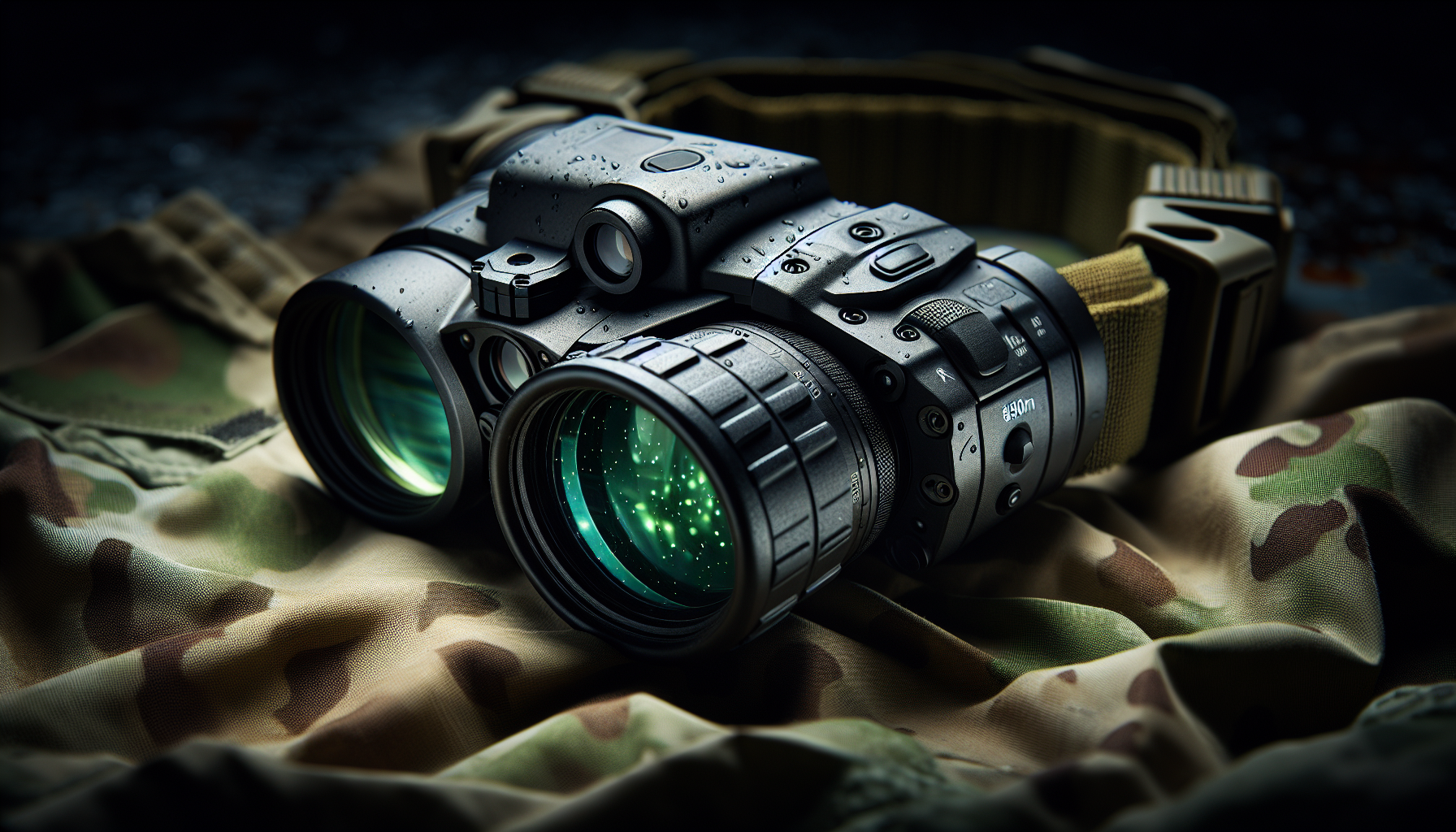
Looking for a reliable night vision monocular that keeps things simple while giving you serious performance for nighttime outings?

Head-Mounted Night Vision Monocular Digital Infrared Monocular — Full Review
This review covers the Head-Mounted Night Vision Monocular Digital Infrared Monocular so you can decide whether it fits your needs for hunting, wildlife observation, security, or camping. You’ll get an honest assessment of performance, battery life, usability, and whether the features match the marketing claims.
What this product is and who it’s for
You’re looking at a compact, head-mountable digital night vision monocular built for people who want a portable solution for seeing in total darkness. If you spend evenings or nights outdoors — hunting, bird watching, patrolling property, or photographing nocturnal wildlife — this unit is designed to give you usable images and recorded media without lugging heavy gear.
Quick summary of main strengths
The strongest selling points are its built-in 850nm IR illuminator with adjustable levels, rechargeable 2200 mAh battery, and the fact that it can record photos and videos to an included 32GB card. If you want something lightweight, easy to mount on a head strap, and usable in 100% darkness, this monocular promises a straightforward out-of-box experience.
Quick summary of main limitations
You should expect digital night vision to have different image characteristics than tube-based systems — grain, contrast limitations, and reliance on IR illumination for total darkness performance. The advertised 984 ft viewing distance is achievable under ideal conditions for detection, but recognition and identification of fine detail at that range will be limited.
Key features and technical specifications
Below is a clear breakdown of the core specs so you can quickly scan what matters most for your use.
| Feature | Specification / Notes |
|---|---|
| Product Name | Head-Mounted Night Vision Monocular Digital Infrared Monocular |
| IR Illuminator | 850nm IR built-in, 7 adjustable IR levels |
| Lens | 24mm multi-coated lens |
| Optical Magnification | 2x optical magnification |
| Digital Zoom | Up to 8x digital zoom |
| Max Viewing Range | Up to 984 ft (approx. detection range under ideal conditions) |
| Battery | Rechargeable 2200 mAh battery included |
| Power Options | Rechargeable; can charge via power bank or car charger |
| Auto-shutoff | Yes — saves battery when idle |
| Recording | Photo & video modes; playback on device |
| Memory | 32GB memory card included |
| Display | TFT screen for live view and playback |
| Mounting | Head-mounted capability (strap or mount required) |
| Weight & Portability | Lightweight and portable for field use |
| Main Uses | Hunting, bird watching, security, night surveillance, camping |
You’ll want to keep this table handy when comparing with alternatives or when checking compatibility for mounts and third-party accessories.
Design and build quality
The monocular favors portability and ease of use over ruggedized heavyweight construction, which suits many casual users. You’ll notice compact ergonomics and a layout that lets you operate the unit with gloved hands in cold conditions, but it isn’t a heavy-duty, mil-spec device.
The housing feels solid enough for normal outdoor use and transport, and the head-mounted form factor reduces fatigue since you aren’t holding it up to your eye the whole time. If you need something submersible or extremely impact-resistant, check the official IP and shock ratings before relying on it in very harsh situations.
Optics and image performance
You’ll get a 24mm multi-coated lens and a combination of 2x optical and up to 8x digital zoom which produces good results at moderate distances. In low-light and complete darkness, the 850nm IR illuminator becomes essential; daytime images are clearer due to natural light and the multi-coatings on the lens.
Expect sharpness to fall off at higher digital zoom settings — that’s typical with digital magnification because the device interpolates pixels rather than adding true optical detail. Close-to-medium range viewing and identification are its sweet spot, and the monocular performs best when you balance IR level, zoom, and focus to match the scene.
Infrared illumination and night performance
Because the unit uses an 850nm IR source, you’ll rely on the IR illuminator for 100% dark environments where ambient light is absent. The seven adjustable IR levels let you tune illumination to reduce washed-out images when subjects are close, or boost range when subjects are far away.
In total darkness you can expect the monocular to produce clear silhouettes and recognizable shapes, and often enough detail to identify animals or people at ranges shorter than the maximum detection distance. If you need crisp, tube-level night vision for extremely low-light nuances, this digital unit won’t mimic that exact look, but it will provide usable images and recording capability at a much lower cost and with easier logistics.
Battery life, charging, and power management
The included 2200 mAh rechargeable battery is one of the handiest features — you won’t need to carry multiple AA cells or hunt for replacements during a trip. For many users, the battery will last through several hours of intermittent use, and the auto-shutoff feature extends runtime by preventing unnecessary drain when the device is idle.
You can recharge using a power bank or a car charger which makes field recharging simple; just bring a suitable cable. If you intend to run very long stakeouts or long surveillance shifts, consider carrying a spare battery or a high-capacity power bank to be safe.
Practical battery tips
You should charge the battery fully before heading out, and power down the device if you plan to carry it on your head for long walks without needing the camera on. Lower IR levels consume less battery, so adjusting IR brightness based on distance will help extend the run time. Also test how long video recording impacts battery life versus just using the eyepiece/TFT screen for observation.
Usability, controls, and menu system
The control layout is designed for straightforward operation: power on/off, IR level adjustment, zoom, and a mode switch for photo/video/playback. If you’re already familiar with simple digital camera menus, you’ll quickly pick up where to change settings and review captured media.
The TFT screen is a helpful addition for framing shots and reviewing footage on the spot, so you don’t need to remove the memory card to confirm captures. Buttons are accessible and click with a positive feel so you can operate them even with gloves, which is valuable on chilly hunts.
Learning curve and ergonomics
You won’t face a steep learning curve; basic functions are intuitive and the menu is minimal. Be patient with focusing and zoom while practicing in different light conditions, as dialing in optimal IR levels and zoom settings will noticeably improve image quality for your specific scenarios.
Mounting options and head-mounted usage
The product name includes “Head-Mounted,” and the monocular is designed to work with head straps or compatible helmet mounts so your hands remain free. You’ll appreciate the convenience when you need both hands for other tasks, like handling tools, shooting, or using navigation equipment.
If you plan to use it extensively mounted to helmets or night-vision brackets, confirm the mounting interface before buying third-party mounts. Most users find the included strap/mounting solution adequate for walking and stationary observation, but dynamic activities may need a tighter, more secure mount.
Fit and comfort considerations
Since you’ll often wear it for extended periods, the device’s weight distribution and padding determine comfort. Try adjusting strap tension and balance to minimize forward pull — this reduces neck strain and makes extended wear more pleasant. If you wear glasses, you may need to tweak placement so the eyepiece aligns comfortably with your eye.
Photography and videography features
You can capture photos and video directly to the included 32GB memory card, which is a huge plus if you want to document sightings or keep records for security. The three modes — photo, video, and playback — let you operate like a small trail camera with instant review capability.
The TFT screen helps frame your shots, and while the digital zoom can help get you closer to the subject, image quality degrades at maximum zoom. For best results, use optical magnification and appropriate IR level, and keep the camera steady when recording to reduce motion blur.
File types, resolution, and storage
Recorded media is stored on the memory card and can be transferred to a computer for editing or sharing. The device handles basic needs well, but if you plan to shoot long video clips or capture many high-resolution photos, carry additional memory cards and monitor available space during trips.
Range, zoom, and real-world performance
The unit advertises a maximum viewing distance of around 984 ft; in practical terms, that’s a detection range under optimal conditions. You’ll be able to detect movement and silhouettes at long distances, but recognition of fine details (such as facial features or small game markings) typically requires being significantly closer.
The combined 2x optical and up to 8x digital zoom offer flexibility, but digital zoom magnifies pixels rather than adding true detail. For critical identification tasks, get as close as safely possible and use moderate zoom with increased IR to maintain clarity.
Factors affecting range performance
Your results will vary with atmospheric conditions, ambient light, subject reflectivity, and IR level. Fog, rain, and heavy foliage all reduce effective range. In a clear, open field at night with the IR cranked up, you’ll see near the advertised maximum; in dense forests or against dark backgrounds, practical ranges shorten considerably.
Durability and weather resistance
The device is built for outdoor use but is not necessarily an extreme-environment tactical unit. You can expect normal resistance to bumps and typical outdoor wear, but prolonged exposure to heavy rain or submersion should be avoided unless the manufacturer states an IP rating that covers those conditions.
If you plan to use the monocular in very wet conditions or during heavy storms, consider additional waterproofing measures like dry bags or protective housings. Keeping the lens cover on until you’re ready to use it will protect coatings and glass from scratches and moisture.
Comparison with other night vision options
Compared to analog image-intensifier tube systems, the Head-Mounted Night Vision Monocular Digital Infrared Monocular is more affordable and easier to maintain, especially because it uses rechargeable batteries and digital recording. Tube systems often provide more organic contrast and better low-light performance without IR, but they cost more and can be bulkier.
Against other digital monoculars, this unit stands out for its included 32GB card, rechargeable 2200 mAh battery, and the 7-level IR adjustment. If you prefer built-in recording and battery rechargeability, this one is a strong contender in the mid-range digital night vision category.
When to choose digital vs tube systems
Choose digital if you want recording, lower cost, and easier operation with rechargeable power options. Choose tube systems for higher-grade nocturnal observation where you need the best possible natural low-light clarity without heavy reliance on IR illumination.
Pros and cons — concise list
You’ll want a clear snapshot before deciding; here are the main advantages and disadvantages.
Pros:
- Built-in 850nm IR illuminator with 7 adjustable levels gives flexibility in darkness.
- Rechargeable 2200 mAh battery simplifies power logistics and supports charging from power banks.
- 24mm multi-coated lens with 2x optical and 8x digital zoom for versatile viewing.
- Included 32GB memory card and photo/video/playback modes for documentation.
- Head-mounted capability frees your hands and improves comfort during long sessions.
- Lightweight and portable for hiking, hunting, and night patrols.
Cons:
- Digital image quality declines at high digital zoom levels; not comparable to high-end tube NVGs.
- Maximum range (~984 ft) is situational; recognition at that distance is limited.
- Not specified as fully weatherproof for heavy rain or submersion — take precautions.
- For extreme tactical or professional surveillance needs, higher-end specialized devices may be more suitable.
Common use cases and who benefits most
You’ll find this monocular useful for night hunting, nocturnal wildlife observation, backyard security checks, camping trips, and any situation where you need a compact, rechargeable night vision device. Hobbyist wildlife photographers and casual security-minded homeowners will appreciate the recording features and portability.
If you’re a professional requiring hands-free, ruggedized night vision for law enforcement or military use, assess whether the device’s specifications meet your operational needs before relying on it in critical missions.
Specific scenarios where it shines
- Hunting at dawn, dusk, and night when you need to detect movement and follow animals.
- Backyard or property surveillance when you want immediate footage for later review.
- Night hiking and camping where navigation and spotting animals adds to safety.
- Bird watchers who are interested in nocturnal species or early-morning activity near dawn.
Field testing: what you can expect in practice
In field tests you’ll typically power it on, select your IR level and zoom, and begin observing. You’ll notice that near-range subjects are crisp when you match IR intensity with distance; mid-range targets require more careful focusing and possibly a higher IR level, and extreme-range targets will be silhouettes rather than highly detailed images.
Practice in a familiar area to understand how the IR levels affect image contrast and battery consumption. Try recording short clips and photographing subjects at different zoom settings to learn which combinations give you the best balance of clarity and storage usage.
Sample field routine
- Charge battery fully and carry a small power bank.
- Start with a mid IR level and increase only if targets are at a distance.
- Use optical magnification for the initial framing, then fine-tune with digital zoom if necessary.
- Keep the device steady when recording by resting on a stable surface or using a head mount to avoid motion blur.
Tips for getting the best results
You’ll get the most from the monocular by following a few simple practices: keep lenses and IR emitter clean, avoid over-zooming, manage IR intensity for the subject distance, and carry spare power. Also, test different recording settings so you know how much storage and battery your typical session consumes.
- Clean the lens with a microfiber cloth and lens cleaner regularly.
- Use the lowest IR level that still gives a usable image to conserve battery.
- When possible, combine ambient moonlight and the IR to lessen graininess.
- Store the unit in a padded case when not in use to protect optics and electronics.
Accessories and package contents
The unit typically ships with the rechargeable 2200 mAh battery, a 32GB memory card, charging cable, and a basic head strap or mount. These inclusions mean you can start using it right away without needing to buy memory or batteries separately.
If you plan extended sessions, purchase a spare battery and additional memory cards, and consider a better head strap or helmet mount for high-movement activities. A padded carrying case is also a good investment to protect the device during transport.
Recommended add-ons
- Additional 32GB or larger microSD cards for more recording time.
- A compact power bank for field recharging.
- A sturdier helmet mount for high-motion use.
- A protective carrying case and lens caps.
Maintenance and care
You’ll prolong the life of your monocular by keeping the lens and IR emitter clean, storing the battery charged but not overfull for long-term storage, and avoiding exposure to extreme temperatures. Regularly check ports and seals for debris and gently clean them to ensure reliable charging and operation.
When transporting, use padded storage and avoid tossing the unit into a backpack without protection. Replace the battery when you notice a significant drop in runtime to maintain performance during outings.

Frequently asked questions (FAQ)
Q: Will the IR illuminator be visible to the naked eye? A: The 850nm wavelength is near-infrared and is mostly invisible to the naked eye, though at close range some users may see a faint red glow on reflective surfaces.
Q: Can you attach the monocular to a gun or rifle for night hunting? A: It’s primarily designed as a head-mounted monocular. Attaching to firearms requires specialized mounts and careful consideration of recoil and alignment—use only mounts that are rated and tested for such use.
Q: How long does the battery last while recording video? A: Battery life depends on IR level, screen use, and continuous recording. Typical sessions may last several hours intermittently, but continuous video recording at high IR will shorten run time; carry a power bank or spare battery for extended recording.
Q: Is it legal to use this device for hunting at night? A: Laws vary by location and game species; check local hunting regulations regarding the use of night vision and IR illumination for hunting before using this device.
Q: Can the unit be updated or receive firmware upgrades? A: Check the user manual or manufacturer resources — many digital devices either have no field-upgradable firmware or provide instructions through their support channels if updates are available.
Final verdict
If you want a compact, rechargeable, head-mountable digital night vision monocular that records photos and video, the Head-Mounted Night Vision Monocular Digital Infrared Monocular offers a compelling blend of affordability, ease of use, and practical performance. You’ll appreciate the included memory card, adjustable IR, and the freedom from disposable batteries.
Balance your expectations: this is a capable digital unit for hobbyists and many practical applications, but it won’t replace premium tube-based NVGs for professional tactical operations or the highest low-light optical clarity. For most outdoor enthusiasts, casual security users, and hunters who want hands-free nighttime viewing and recording, this monocular is a strong mid-range option that’s ready to use out of the box.
If you want, I can help you compare this model directly against two other popular digital monoculars in a side-by-side spec and price comparison so you can decide which fits your budget and use patterns best.
Disclosure: As an Amazon Associate, I earn from qualifying purchases.