
Are you trying to decide whether the Vector Optics Paragon 4×24 Mini Prism Sight BDC is the right optic for your AR-15 setup?

Quick product summary
You’ll get a compact, fixed 4x prism optic designed for fast mid-range engagement while still giving you a top footprint for mounting a red dot for CQB switching. The package aims to balance speed and precision with a durable 6061-T6 aluminum body, an illuminated 1 MOA center dot, and built-in BDC markings for .223/5.56.
Key specifications
You’ll want to see the core specs at a glance so you can judge fitment, weight, and features quickly. The table below breaks down the key numbers and features so you don’t have to scan dense paragraphs to find what matters.
| Specification | Detail |
|---|---|
| Model | Vector Optics Paragon 4×24 Mini Prism Sight (SCPS-M04) |
| Magnification | Fixed 4x |
| Objective Diameter | 24 mm |
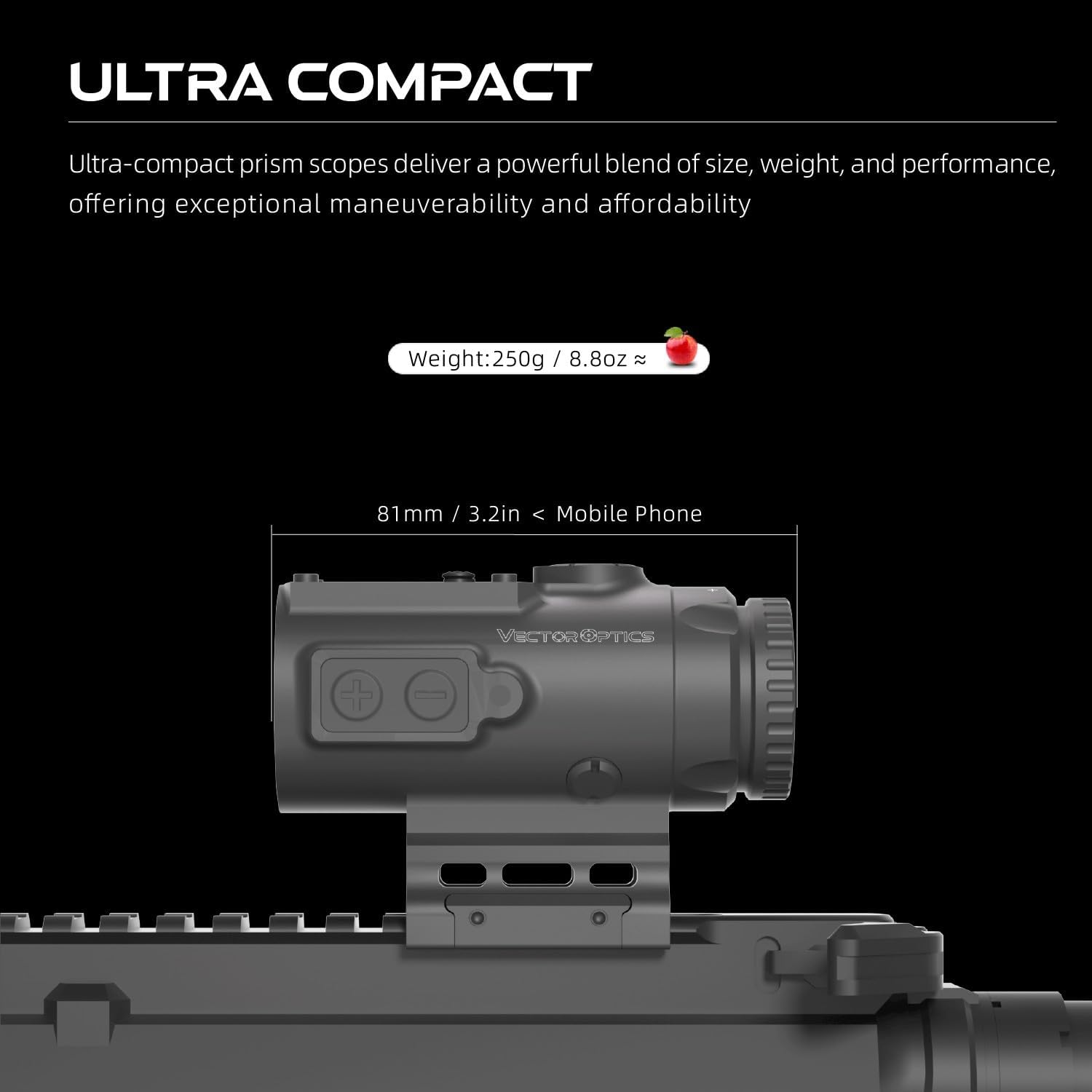
| Overall Length | 81 mm (3.2 inches) |
| Weight | 250 g (8.8 oz) without mount |
| Body Material | 6061-T6 aluminum |
| Water Resistance | IP67 |
| Impact Protection | Rated up to 1000 g |
| Reticle | BDC for .223 / 5.56 with 1 MOA illuminated center dot |
| Illumination Levels | 10 levels; low settings compatible with night vision |
| Coatings | Fully multi-coated (FMC) lenses |
| Adjustments | Diopter adjustment; windage/elevation for zeroing |
| Mounting | Riser and top red dot footprint with detachable plate |
| Included Accessories | Riser, plastic wrench, hex key, cleaning cloth |
| Battery | Not included |

This image is property of Amazon.com.

Build quality and durability
You’ll notice right away that the Paragon feels solid for its size, thanks to the aircraft-grade aluminum construction. It’s designed to take reasonable field abuse without failing, and the compact size helps keep your platform balanced and maneuverable.
Materials and weight
You’ll appreciate that the optic uses 6061-T6 aluminum, a common choice for mil-spec optics because it’s light and strong. Weighing 250 g (8.8 oz) without the mount, it won’t noticeably affect the balance of most AR-15 builds and is lighter than many LPVOs.
Weather resistance and impact protection
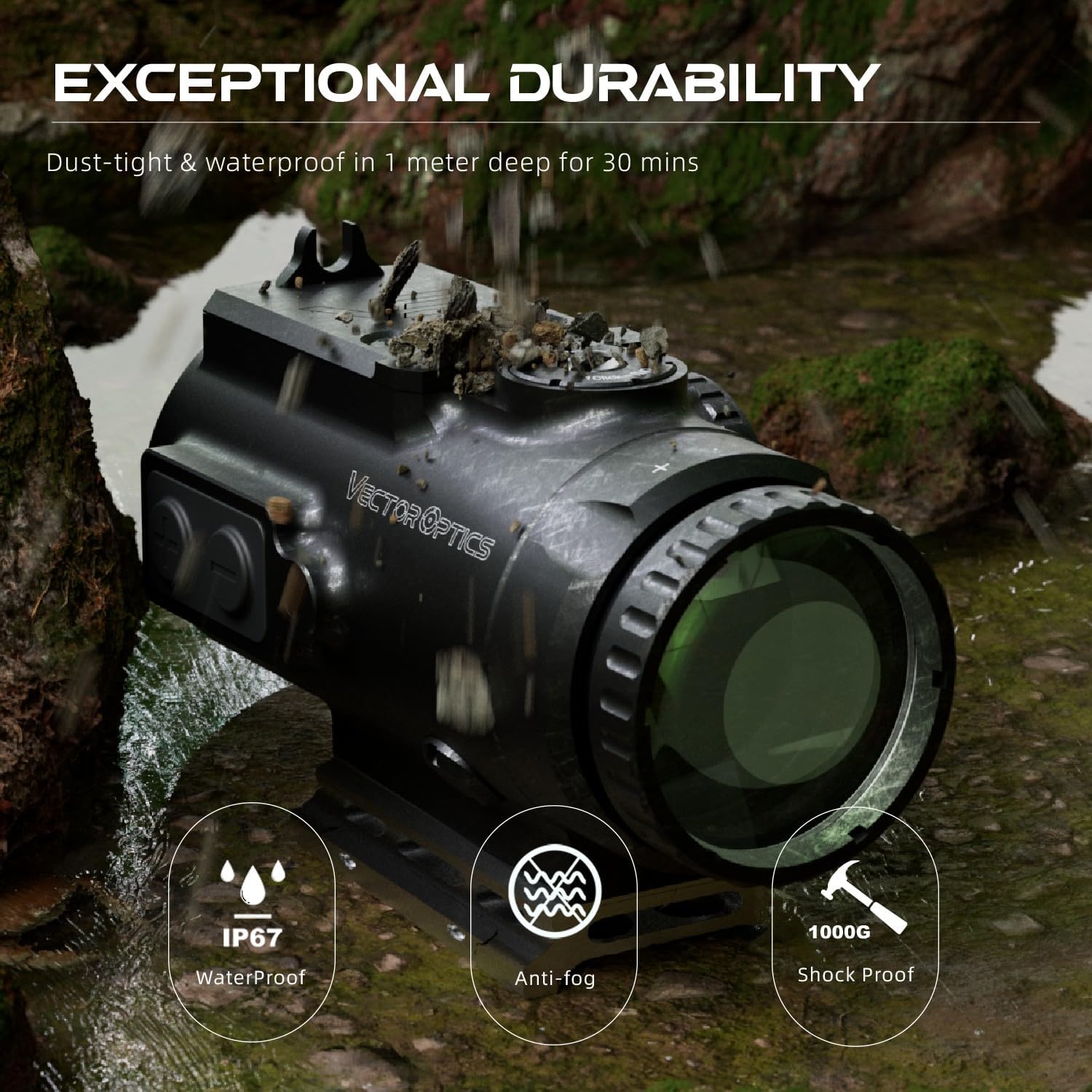
You’ll want reliable performance regardless of conditions, and the IP67 rating keeps dust and temporary immersion out of the housing. The impact protection rating up to 1000 g gives you confidence that normal recoil and field knocks won’t immediately ruin the optic.
Optical performance
You’ll get an all-glass optical path with a prism instead of a traditional erector tube, which gives this optic compactness and a rugged internal structure. In practical terms, that means sharp targets at mid-range and a short package that’s easy to mount low.
Lenses and coatings
You’ll benefit from fully multi-coated lenses that improve light transmission and reduce reflections. Those coatings help retain usable brightness in low-light conditions and prevent the washed-out look you sometimes get from cheaper optics.
Clarity, edge-to-edge, and eye box
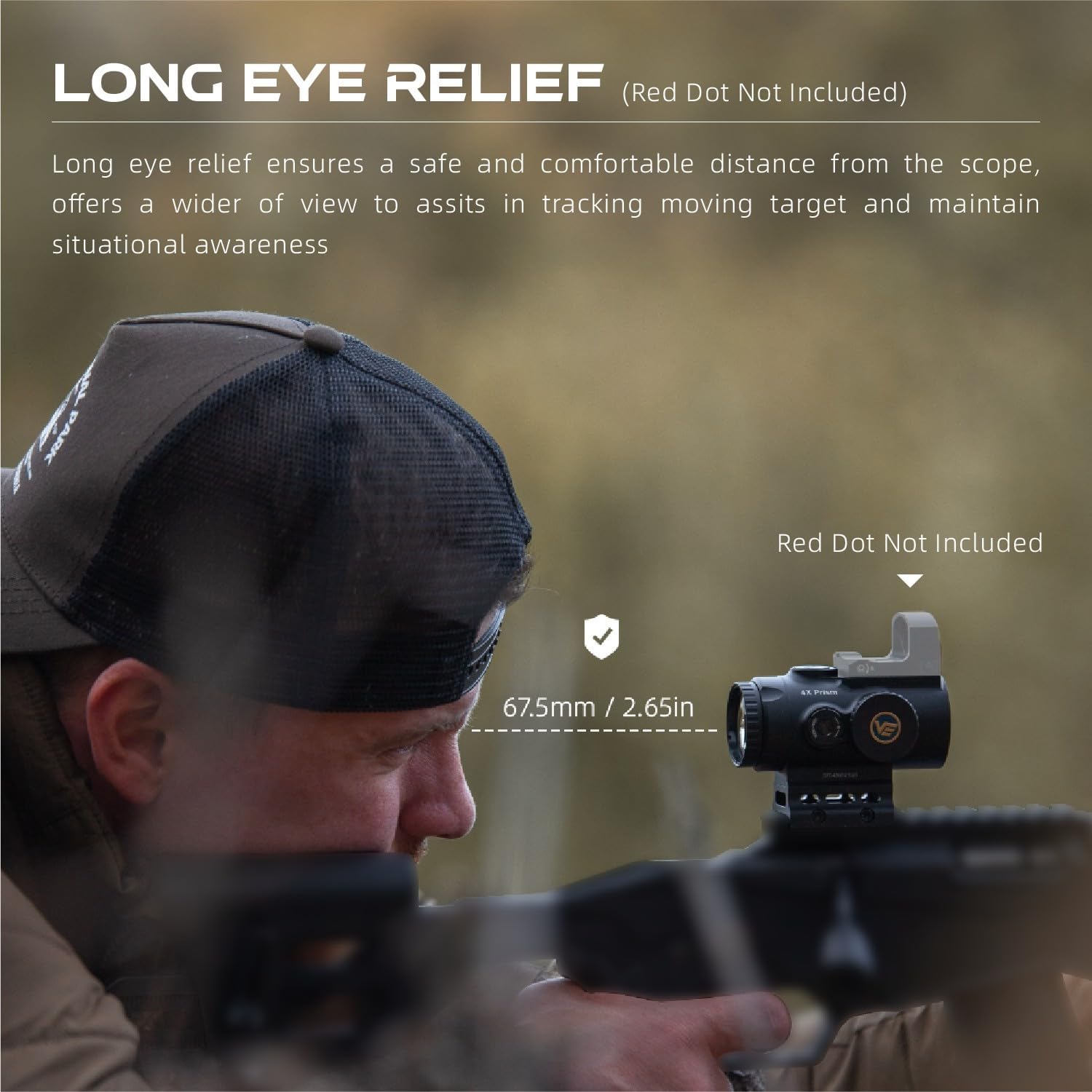
You’ll find the eye box is described as “extra-large,” which matters when you’re shooting quickly or switching shoulders. The Paragon aims for edge-to-edge clarity with limited vignetting, so you can maintain a full field of view even when the optic is mounted slightly off ideal height.
Field of view and eye relief
You’ll have a fixed 4x view that gives a good balance between a close-in red-dot view and the magnified look of an LPVO. Eye relief on prism sights tends to be generous, and the Paragon’s eye-box design allows faster target acquisition without exact eye placement necessary for red dots.
This image is property of Amazon.com.
Reticle and illumination
You’ll be using a BDC reticle calibrated for .223/5.56 with an illuminated 1 MOA center dot that helps you place precise shots. The BDC markings save you time on holdovers out to typical mid-range distances for the caliber, while the center dot gives you a fine reference for precision.
BDC reticle for .223/5.56
You’ll get bullet drop compensation markings tailored to the .223/5.56 ballistics, which simplifies holdovers if you’re using standard loads. Those marks are especially useful when you need quick corrections at 100–400 yards without dialing elevation.
1 MOA illuminated center dot and night compatibility
You’ll be able to use the 1 MOA center dot for precise aiming and fine shot placement, particularly on smaller targets. With 10 brightness levels and low settings compatible with night vision, the illumination system gives flexibility from bright daylight to low-light scenarios; remember the battery is not included.
Mounting and compatibility
You’ll like that the Paragon includes a riser section and a detachable top plate for adding a red dot sight, letting you set up a co-witness or a two-optic solution. The riser helps match the optic to typical AR sight height, and the top footprint intentionally mirrors popular red-dot patterns for fast switching.
Top footprint for red dot and riser
You’ll find the small detachable plate gives a mounting point for a micro red dot so you can keep a close-quarters option mounted on top. The included riser elevates the prism to match the line-of-sight on AR platforms, which is helpful when you want co-witness with iron sights or to ensure a comfortable cheek weld.
Fits AR-15 / M4 and zeroing
You’ll be able to mount the Paragon on AR-15 and similar platforms easily thanks to the riser and the standard footprint. Zeroing works the same as other prism optics: use the windage and elevation adjustments to set your POI, and confirm at your preferred distances using the BDC marks to validate holdovers.
This image is property of Amazon.com.
Handling and ergonomics
You’ll appreciate the compact size when you move through tight spaces or shoulder the rifle quickly. Controls are intentionally kept simple so you can make adjustments without fumbling in a stress scenario.
Controls and adjustments
You’ll adjust the illumination with a knob or dial (this varies by model), and the mechanical zeroing features are straightforward. Windage and elevation adjustments are generally tactile enough for field changes and precise enough for range work.
Diopter adjustment and eyepiece
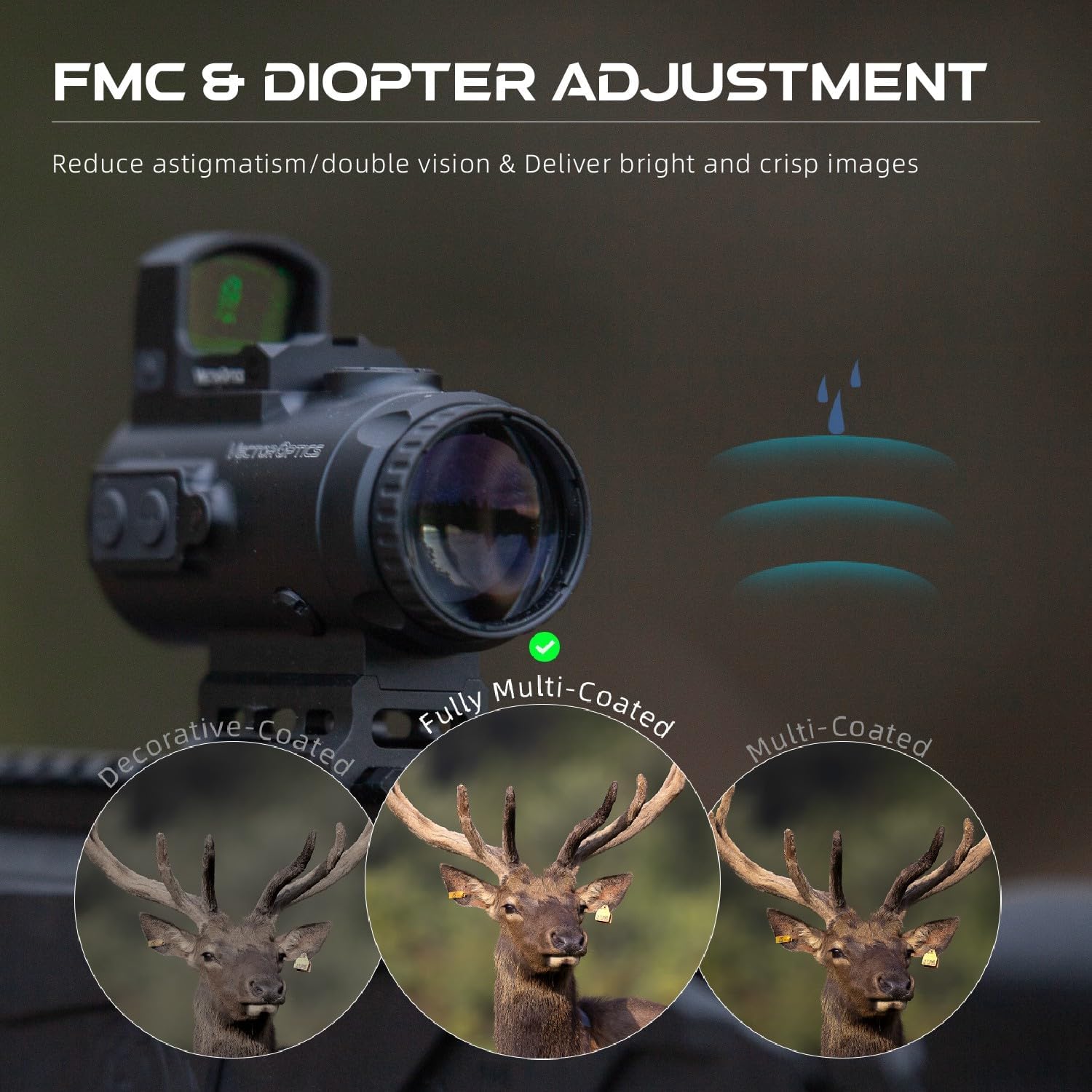
You’ll appreciate the diopter adjustment, which reduces astigmatism and doubles down on delivering a crisp, distortion-free image. If you’ve ever struggled with slight double vision on a fixed prism, the diopter lets you fine-tune the eyepiece to match your eye.
Ballistics and BDC use
You’ll be able to use the BDC hash marks for quick holds at common distances for .223/5.56 loads, which is ideal for typical patrol or range use. The reticle is optimized for these calibers, so you avoid guesswork with holdovers if you adhere to standard ammunition and atmospheric assumptions.
Using BDC for .223/5.56
You’ll want to verify the BDC for your specific load since point-of-impact changes with bullet weight, velocity, and atmospheric conditions. Use the BDC as a fast reference and then confirm with live fire to create a mental or written table of shots at known distances.
Range estimation and holdovers
You’ll use the reticle markings and the 1 MOA center dot to estimate drops and manage holdovers; practice will make this process second nature. If you need precise adjustments for longer range work, you can also use the mechanical adjustments in combination with the BDC to refine point-of-impact.
This image is property of Amazon.com.
Real-world shooting impressions
You’ll notice the Paragon excels at making quick hits at mid-range while still staying small enough for aggressive close-quarters movement. The top red-dot footprint is genuinely useful for when you want the best of both worlds without carrying two separate optics.
Close-quarters and CQB performance
You’ll benefit from the red-dot platform on top when you’re transitioning to very short ranges or moving through structures. Using a micro red dot mounted on the top plate lets you keep both optics permanently mounted and switch instantly without losing sight picture.
Mid-range precision and target acquisition
You’ll find the 4x prism offers a strong advantage over non-magnified red dots when engaging silhouettes and smaller targets at 100–300 yards. Target acquisition remains rapid thanks to the generous eye box and the clear reticle, while the 1 MOA dot provides the fine aiming point needed for accurate shots.
Maintenance and care
You’ll want to keep the lenses clean and the mechanics free of grit to preserve clarity and functionality. A simple routine of wiping the lenses with the included cloth and keeping the caps and housing free of debris will extend the optic’s usable life.
Cleaning and battery
You’ll clean the lenses using a microfiber cloth and a lens-safe cleaning solution to avoid damaging the coatings. For illumination, you’ll need to supply your own battery; check the battery type in the manual and ensure you carry a spare when you head into the field.
Storage and transport
You’ll protect the optic during transport by storing it in a padded case or using scope caps to prevent lens damage. Given its compact size, you can also leave it mounted on a rifle and transport the whole system in a properly padded rifle case without adding excessive bulk.
This image is property of Amazon.com.
Pros and cons
You’ll want a clear list of trade-offs before deciding to buy. Below are the main strengths and limitations you should weigh for your intended use.
Pros:
- You’ll enjoy a compact, lightweight 4x optic that won’t overburden your AR platform.
- You’ll get BDC reticle calibrated for .223/5.56 and a precise 1 MOA illuminated center dot.
- You’ll appreciate the top red-dot footprint for fast CQB transitions and co-witnessing.
- You’ll have confidence in the IP67 rating and solid aluminum construction for field durability.
- You’ll experience a generous eye box and clear edge-to-edge optics.
Cons:
- You’ll need to supply your own battery for illumination, and the package doesn’t include it.
- You’ll be limited to a fixed 4x magnification, so you won’t have the variable range flexibility of an LPVO.
- You’ll want to confirm the BDC with your specific ammunition for best accuracy.
- You’ll add a small riser and weight if you want both the prism and a top-mounted red dot.
Comparison to alternatives
You’ll find different optic types offer different advantages, so it’s useful to compare the Paragon with other common choices like red dots and low-power variable optics (LPVOs). The table below gives you a quick frame of reference.
| Optic Type | Strengths | Limitations |
|---|---|---|
| Vector Optics Paragon 4x Prism | Compact, durable, BDC reticle for .223/5.56, top red-dot footprint | Fixed magnification, needs battery, less flexible than LPVO |
| Micro red dot | Extremely fast at close range, minimal weight | No magnification, limited mid-range precision |
| 1-6x or 1-8x LPVO | Variable magnification for close to longer range | Heavier, larger footprint, pricier |
| Fixed 3x prism | Lighter than LPVO, good CQB/mid-range compromise | Less magnification for longer shots |
You’ll pick the Paragon if you want a balance between precise mid-range shooting and immediate close-range capability when combined with a micro red dot. If you rely heavily on long-range precision or want variable magnification, an LPVO might be a better fit.
Prism sights vs low-power variable optics (LPVOs)
You’ll notice prism sights are more compact and often more robust because they use a fixed optical path. LPVOs give you the flexibility to change magnification which helps at varied distances but adds weight and cost.
When to choose this over a red dot
You’ll choose the Paragon over a standard red dot if you need magnification for reliable mid-range engagements while maintaining the option to use a red dot mounted on top. If most of your work is inside 100 yards and weight matters more than magnification, a red dot alone may be better.
Buying tips and what to expect
You’ll want to confirm mount compatibility, check whether any additional rings or mounts are necessary, and plan to buy the battery before your first range session. Factor in the need to verify the BDC with your ammunition so you can make fast, accurate holds in the field.
- You’ll verify which battery is required and have at least one replacement on hand.
- You’ll check the riser height and ensure the optic aligns with your stock and cheek weld.
- You’ll test the BDC at several distances to confirm POI and create a personal holdover guide.
- You’ll consider the weight and footprint when adding to an existing build.
Final verdict
You’ll get a thoughtful compromise between speed and accuracy with the Vector Optics Paragon 4×24 Prism Sight, especially if you run an AR-15 that needs a small, robust optic for mid-range with a fast CQB option. The combination of a BDC reticle tuned for .223/5.56, 1 MOA illuminated dot, red-dot footprint, and IP67 protection makes this a strong contender for shooters who want an affordable, compact prism optic with practical features.
Frequently asked questions (FAQ)
You’ll likely have a few final questions before buying. Below are common queries and concise answers to help you make a final call.
Q: Does the Paragon include the battery? You’ll need to buy the battery separately; the package does not include it. Check the manual or product listing for the correct battery type before you head to the range.
Q: Can you mount a micro red dot on top? You’ll be able to mount a micro red dot using the detachable plate on the top footprint. The plate includes a front iron sight, too, which can assist if you remove the red dot.
Q: Is this optic suitable for night use? You’ll be able to use low-intensity illumination settings that are compatible with night vision. For true low-light performance you’ll also rely on your rifle’s ammunition, ambient light, and possibly a dedicated night vision system.
Q: How accurate is the BDC for different .223 loads? You’ll want to test the BDC with your exact load because bullet weight and velocity change the drop profile. The reticle is optimized for common .223/5.56 loads, but live-fire confirmation is necessary for exact holds.
Q: Can you zero this sight easily? You’ll zero this sight using the adjustable windage and elevation turrets or dials, and the diopter adjustment helps fine-tune the clear image. Expect a standard zeroing session on the range to get it dialed in.
Q: Is it rugged enough for heavy use? You’ll benefit from a 6061-T6 aluminum body, an IP67 rating, and impact protection up to 1000 g, which together indicate solid field durability. Frequent hard impacts or misuse will still degrade any optic, so treat it like the precision tool it is.
Q: Should you pick this if you want an all-day carry optic? You’ll find it is lightweight and compact enough for many shooters to run all day, but consider your mission profile: if you need variable magnification for long-range work, a different optic may suit you better.
If you want more detail about any specific aspect—mounting geometry, exact battery type, or a comparison to a particular LPVO or red-dot model—tell me which area you want to focus on and you’ll get a focused deep answer.
Disclosure: As an Amazon Associate, I earn from qualifying purchases.