Would a small, 3D-printed accessory really change how your scope performs in bright conditions and on the range?

Overview of Killflash Hex Anti-Reflection Device Compatible with 30mm LPVO Scopes
You’ll appreciate that this is a purpose-built anti-reflection device for 30mm LPVO scopes designed to reduce glare and reflections. The Killflash Hex Anti-Reflection Device Compatible with 30mm LPVO Scopes is a friction-fit, 3D-printed ARD intended to be a simple, no-tools solution to reduce the chance your scope reflects light back toward an observer or enemy position.
What this product aims to do
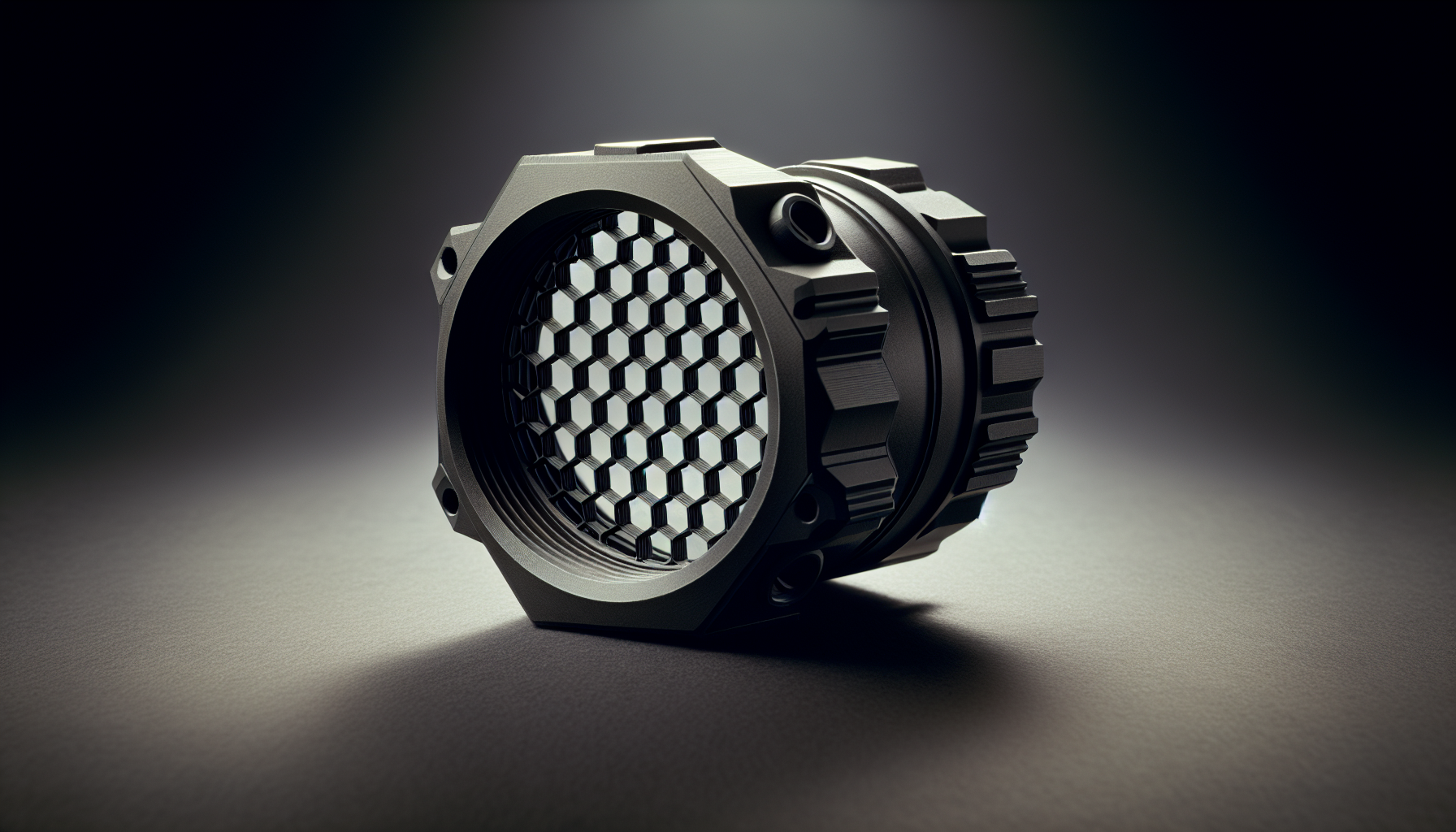
This killflash aims to suppress stray reflections from the objective lens that can give away your position. It uses a honeycomb-style front (hexagonal cell pattern) to block off-axis reflections while trying to preserve your field of view and image brightness as much as possible.
Who should consider it
If you use a 30mm LPVO for hunting, range work, or tactical shooting and you care about minimizing glint, this accessory is relevant to you. It’s also useful when you want a lightweight, non-permanent solution that you can install or remove quickly without tools.
Key Features
Below are the main selling points and tangible benefits you’ll find with this killflash. Each feature is practical and focused on functionality rather than novelty.
Precise Fitment
The device is designed for a friction fit on scopes with a 30mm objective end, which means you’ll need to apply some force to install it. That exact fit reduces wobble and you’ll notice the solidity when the ARD is correctly seated; it’s not a loose slip-on that will fall off during movement.
Reduces Glare
The primary function is to reduce glare and reflections from the objective glass, especially when light strikes at shallow angles. You should see a meaningful reduction in bright glints that otherwise attract attention or distract you when shooting in sunny or snow-covered environments.
PETG-CF Material
This version uses carbon-fiber-reinforced PETG filament (PETG-CF) which improves heat resistance and stiffness over standard PLA or PLA+. The reinforced PETG is less likely to soften in hot environments and holds its shape under stress better than common consumer filaments.
Original Design and Manufacturing
The product is an original Hammy3DPrints design with 1,700+ designs produced out of St. Louis, Missouri, which signals a level of experience in 3D-printed accessories. You’ll be buying something that was designed and printed by a small shop with a track record in this kind of part.
Specifications and Quick Facts
Below is a compact table that breaks down the critical specs so you can quickly compare what matters most. This gives you a side-by-side snapshot of fit, material, and installation traits.
| Specification | Detail | Notes |
|---|---|---|
| Fitment | 30mm objective end | Friction fit; requires force to install |
| Material | PETG-CF (carbon fiber reinforced PETG) | Higher temperature resistance than PLA/PLA+ |
| Function | Anti-reflection / glare reduction | Honeycomb hex pattern front |
| Finish | 3D printed; may have front-side shine | Can be sanded or spray painted to reduce shine |
| Maker | Hammy3DPrints (St. Louis, MO) | 1700+ designs printed |
| Installation | No tools; press-fit | Tight fit helps prevent shift |
| Typical Use | LPVO scopes, hunting, tactical | Low weight and quick removal |
Installation and Fitment
You’ll find installation straightforward if you understand the friction-fit nature and prepare the scope properly. This section covers step-by-step guidance and practical tips to get a secure fit without damaging your scope.
Preparing the scope
Before you press the killflash on, clean the outer rim of your objective bell so no grit or debris will get trapped and scratch the finish. You’ll also make sure any factory-applied thread protectors or sunshades are removed, because the killflash expects to seat directly on the 30mm objective end.
Installing the killflash
Line up the device squarely with the objective end and apply even pressure while pushing it on until it snaps into place or feels seated. Expect to use noticeable force; the product is designed tight intentionally to avoid loosening during recoil or movement.
Removing the killflash
To remove the ARD, grip the outer body and pull straight off, or gently twist while pulling to break the seal. If it’s very tight, work slowly to avoid catching the finish on the scope; warming the area slightly (e.g., in a warm room) can soften the plastic a little for easier removal.
Performance and Optical Impact
You’ll want to know what the killflash does to the image, field of view, and light transmission. This section explains the likely trade-offs and real-world behavior so you can set realistic expectations.
Light transmission and brightness
A honeycomb ARD inevitably blocks some light—each cell removes peripheral rays—so you should expect a slight reduction in brightness, particularly when operating at lower magnifications. For most daytime shooting, that light loss is minor and often unnoticeable, but in very low-light conditions you may see a subtle dimming.
Field of view and vignetting
Because the Killflash Hex Anti-Reflection Device Compatible with 30mm LPVO Scopes is designed to fit the objective end and its cell geometry is sized for LPVOs, you’ll experience minimal vignetting in normal use. However, at extreme magnifications or with very fast (low f-number) optics, the outermost cells may create slight edge darkening or shadowing under certain light angles.
Glare suppression effectiveness
You’ll notice significantly fewer off-axis reflections—especially when light hits at shallow angles—because the hex cells block direct lines of sight to reflective surfaces. The reduction is most noticeable to an outside observer trying to spot a glint on your objective; it’s less about improving sight picture and more about reducing your visibility to others.
Finish, Appearance, and Customization
The printed part’s appearance can vary depending on print orientation and finishing choices. You’ll probably want to make a few cosmetic adjustments to improve stealth and match your scope.
Front-face shine and how to fix it
Because the front of the killflash is printed against the print bed, it can have a slight glossy sheen that may reflect under certain lighting. You can sand that surface with fine grit sandpaper or apply a matte spray paint to reduce shine; both methods will lessen front-face glint while preserving the cell structure.
Painting and color options
Painting the exterior provides not only a matte finish but also color matching to your optic or rifle setup. Use a plastic adhesion primer if you plan to spray paint, and apply thin coats to avoid filling the hex cells or changing the internal geometry.
Durability of finish
If you sand or paint it, the PETG-CF base is robust enough to handle light field wear, though aggressive contact with abrasive surfaces can scar the plastic. You should avoid solvents that can weaken PETG; choose paints and primers rated for plastics.
Material Analysis: PETG-CF
The PETG with carbon fiber reinforcement is central to the product’s performance characteristics. You’ll want to understand what the material gives you and where it has limits.
Heat resistance and stability
Compared to PLA or PLA+, PETG-CF is more heat resistant, meaning you’re less likely to find the part softening if left mounted on a scope in a hot parked vehicle or under direct sunlight. That heat resilience is valuable for real-world storage and outdoor use where temperatures can spike.
Stiffness and brittleness trade-off
The carbon fiber in PETG increases stiffness which helps the part maintain shape and secure fit, but carbon fiber can also introduce brittleness relative to unfilled PETG. You’ll find the part holds firm but be mindful not to subject it to high-impact blows that could crack rather than flex.
Chemical and solvent resistance
PETG is generally resistant to many chemicals, but aggressive solvents like acetone will damage it. If you clean your optics with strong cleaners, avoid letting them pool around the ARD or use a cloth barrier to protect the plastic.
Use Cases and Real-World Scenarios
This killflash is useful in several shooting and observation contexts. You’ll want to match the product’s strengths to your typical environments.
Hunting
When hunting in bright sunlight or snow, reflections off the objective can reveal your position. Using this ARD will help you stay stealthier in those conditions, and the low weight means you won’t noticeably change the balance of your rifle.
Tactical and field operations
In tactical settings where signature reduction matters, the hex ARD helps avoid giving away your position during movement or from elevated positions. The quick-install friction fit allows you to add or remove it on the fly as operational needs change.
Range and competition
If you compete or train on the range, the killflash is a simple way to check how glare affects target identification and to keep your optic discreet during certain courses of fire. It’s also a low-cost accessory for testing how ARDs interact with different LPVO models.
Compatibility and Limitations
Knowing what this product will and won’t do will prevent surprises when you try to use it on your equipment. You’ll want to be clear about the intended scope types and caveats.
Designed for 30mm objective ends
This ARD is specifically sized for scopes with a 30mm objective end, so it won’t be a reliable fit on 32mm, 34mm, or other sizes without modification. If your scope bell varies in contour or has an irregular edge, the friction fit may be imperfect.
Not a permanent mount
The killflash is friction-mounted, which keeps it non-destructive and easy to remove, but that also means it’s not a hard-mounted accessory designed to survive extremely rough use without attention. Check the fit before missions or long movements to ensure it hasn’t shifted.
Potential for small image artifacts
Depending on your scope’s exit pupil and magnification, you might see minor visual artifacts like shallow diffraction or edge shading from the hex pattern. These are generally minimal for most users and are outweighed by the benefit of reduced external reflection.
Maintenance and Care
Proper care keeps your killflash functioning and looking good over time. You’ll want to follow a few straightforward steps to maintain it.
Cleaning
Remove the device before cleaning the objective lens to avoid pushing dirt into the lens or scratching either surface. Wipe the killflash with a soft, damp cloth and mild soap if needed, and avoid aggressive solvents or scrubbing that could abrade the finish.
Storage
Store the ARD in a cool, dry place away from UV and high heat to prevent long-term degradation of the filament. If you paint it, avoid stacking items on top of it to prevent marring the finish or deforming the honeycomb structure.
Inspecting for wear
Periodically check the inner seating area for deformation or cracks, as those can compromise the fit. If the friction fit loosens over time, a replacement is better than attempting to force or glue it to your scope.
Pros and Cons
You need a quick way to weigh the strengths and trade-offs before deciding. This section presents the main advantages and the limitations you’ll experience.
Pros
- Effective reduction of objective glare and reflections.
- Tight friction fit designed specifically for 30mm objective ends.
- PETG-CF material gives better heat resistance and rigidity than PLA.
- Lightweight and easy to install/remove without tools.
- Inexpensive compared to some metal or machined ARDs.
Cons
- Requires significant force to install; may be intimidating if you’re unfamiliar.
- Slight reduction in brightness and potential minimal vignetting under extreme conditions.
- Front surface may have a sheen out of the printer and will require sanding or paint for optimal stealth.
- Not universal—only fits 30mm objective ends without modification.
- PETG-CF can be stiffer and more brittle than other plastics, so it can crack under impact.
Comparison with Other ARD Options
You’ll find a range of ARDs on the market, from machined metal to foam inserts and 3D-printed models. Knowing how this product stacks up helps you choose the right solution.
Metal vs 3D-printed
Machined metal killflashes are highly durable and often have a very clean finish, but they are heavier and more expensive. The Killflash Hex Anti-Reflection Device Compatible with 30mm LPVO Scopes trades some of that sturdiness for low weight, lower cost, and rapid manufacturability—advantages if weight and price matter to you.
Foam and removable covers
Foam covers or flip-up caps are less likely to alter light transmission but don’t reduce reflections the same way a honeycomb ARD does. If your priority is zero optical impact when in use, foam won’t help; if camouflage and temporary concealment are enough, foam has benefits.
Other 3D-printed designs
Other printed designs may use different cell geometries or softer materials; the PETG-CF hex design emphasizes temperature resistance and structural rigidity. If you want a softer fit or more flexible material, different filaments exist, but they will sacrifice heat resistance.
Buying and Value Considerations
When you decide whether to buy, consider how often you’ll use it, your sensitivity to reflections, and your tolerance for the small trade-offs.
Price vs functionality
This killflash is typically a modest investment for the functionality it provides, especially compared to metal units. If you frequently operate in conditions where reflections could compromise your position, you’ll likely find it worthwhile.
Multiple scopes and portability
Because it’s inexpensive and easy to install/remove, you can buy more than one if you have several 30mm LPVOs. Carrying a spare in your gear bag is cheap insurance against damage or loss.
Return on practical use
If glare has been a recurring issue in your field work or hunting, you’ll notice the benefit immediately. The return is practical (reduced signature) rather than cosmetic or purely aesthetic.
Safety and Legal Notes
There are a few safety-related considerations to be mindful of when using any accessory on a firearm.
Eye relief and alignment
Always check eye relief and alignment after installing the killflash to ensure it doesn’t shift your head position or create unexpected optical behavior. Reposition your cheek weld and re-zero if needed to account for any minute differences.
Interference with accessories
If you use a sunshade, lens cover, or threaded accessories, ensure they are compatible with the ARD and won’t press against it in a way that deforms the fit. Don’t force incompatible components together.
Responsible use
Use the ARD as part of a responsible approach to firearms and optics handling; it reduces reflection but does not change the need for safe handling practices. Never compromise safety for concealment or quick installs.

Frequently Asked Questions (FAQs)
Below are common questions you’ll likely have, with clear, actionable answers.
Will this killflash affect my scope’s zero?
It shouldn’t affect your zero; the ARD mounts on the objective end and doesn’t change the optical path within the scope. However, always confirm zero after adding or removing accessories to be safe.
Can I paint it any color?
Yes, you can paint it, but use a primer designed for plastics and apply thin coats. Avoid filling the cells or changing the internal geometry, which would harm the ARD’s function.
How much light loss should I expect?
Expect a small but generally negligible brightness reduction under most daylight conditions. In very low-light or dusk scenarios you may notice a subtle dimming.
Is PETG-CF safe for hot climates?
Yes, PETG-CF handles higher temperatures better than PLA/PLA+ and is a good choice for hotter climates. Still avoid prolonged exposure to extreme heat beyond typical environmental ranges.
Can I fit this on a 32mm scope with an adapter?
It’s not designed for 32mm; adapters or forced fits risk damage to the scope or ARD. If you need a 32mm solution, choose a product sized specifically for that diameter.
Final Recommendation
If you want a low-cost, lightweight, and effective way to reduce objective-glint on a 30mm LPVO, the Killflash Hex Anti-Reflection Device Compatible with 30mm LPVO Scopes is worth serious consideration. You’ll get a well-thought-out, 3D-printed design in a higher-temperature filament that’s purpose-built for the role, and with some simple finishing (sanding or paint) you can reduce any remaining shine and match your setup aesthetically.
Practical advice before you buy
Measure your objective end carefully, be prepared to use a firm press for installation, and plan to perform a light sanding or paint job if you need a completely matte finish. Keep in mind the trade-offs—slight light loss and the need for occasional inspection—but balance them against the advantage of reduced visible reflections in the field.
If you want specific tips on painting, sanding, or performing fit tests with your particular scope model, tell me the scope make and model and I’ll give step-by-step guidance you can follow.
Disclosure: As an Amazon Associate, I earn from qualifying purchases.